
About Ottawa Gospel Hall
Our History
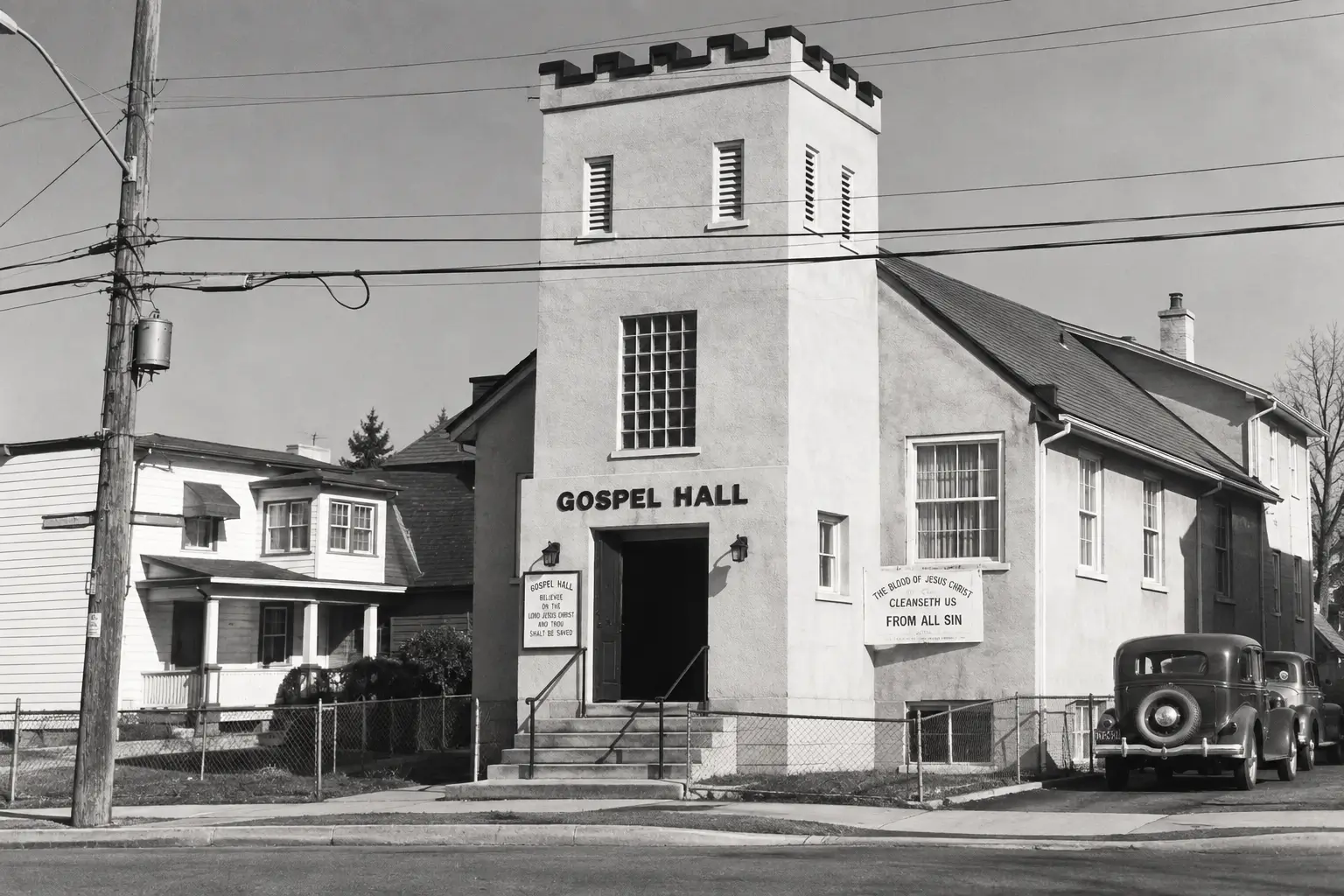
Ottawa Gospel Hall has a long history in the city of Ottawa. While the exact date when the assembly began is not known, historical accounts place its beginnings in the 1870s or early 1880s. Over the decades, the assembly met in homes, rented halls, and later in properties of its own.
This page traces some of the key places, people, and ministries that shaped the assembly from its earliest years to the present.
Historical source note
About this history
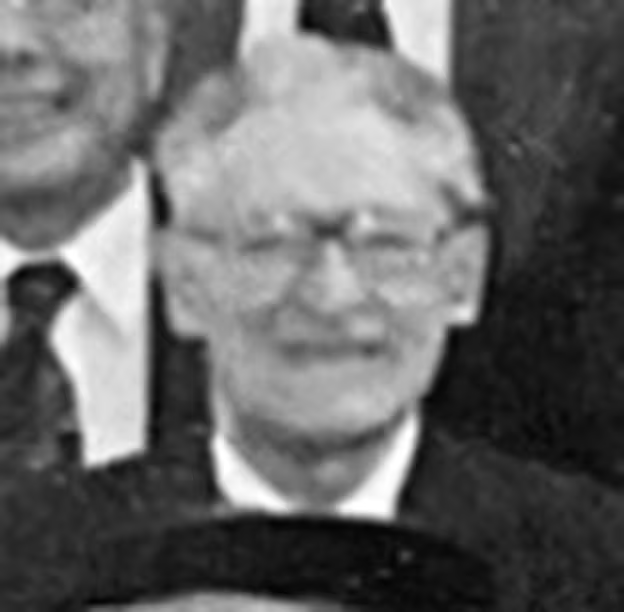
This history draws substantially on a booklet compiled and edited by the late Kenneth E. Prince in 1999 and 2000, using assembly records, published sources, and recollections gathered over many years.
Documentation from the earliest years is limited. No complete assembly records survive from that period, and some dates are therefore approximate. Where the historical record is uncertain, this page reflects that uncertainty rather than presenting later conclusions as established fact.
Historic photographs on this page have been reproduced from copies contained in the booklet and digitally enhanced for clarity.
Then and now
The places behind the story
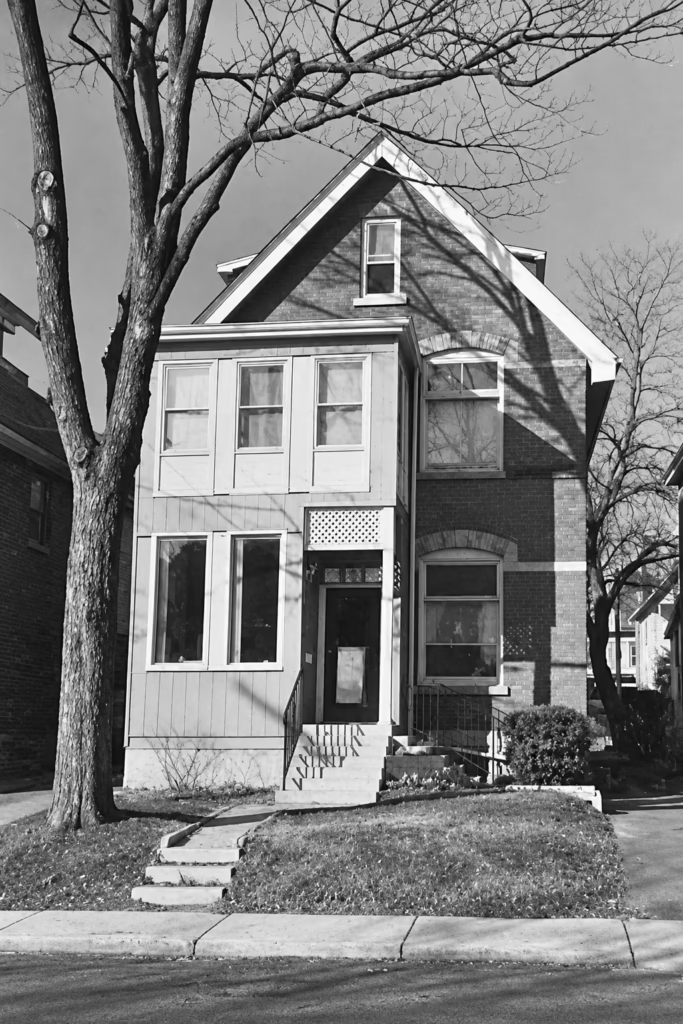
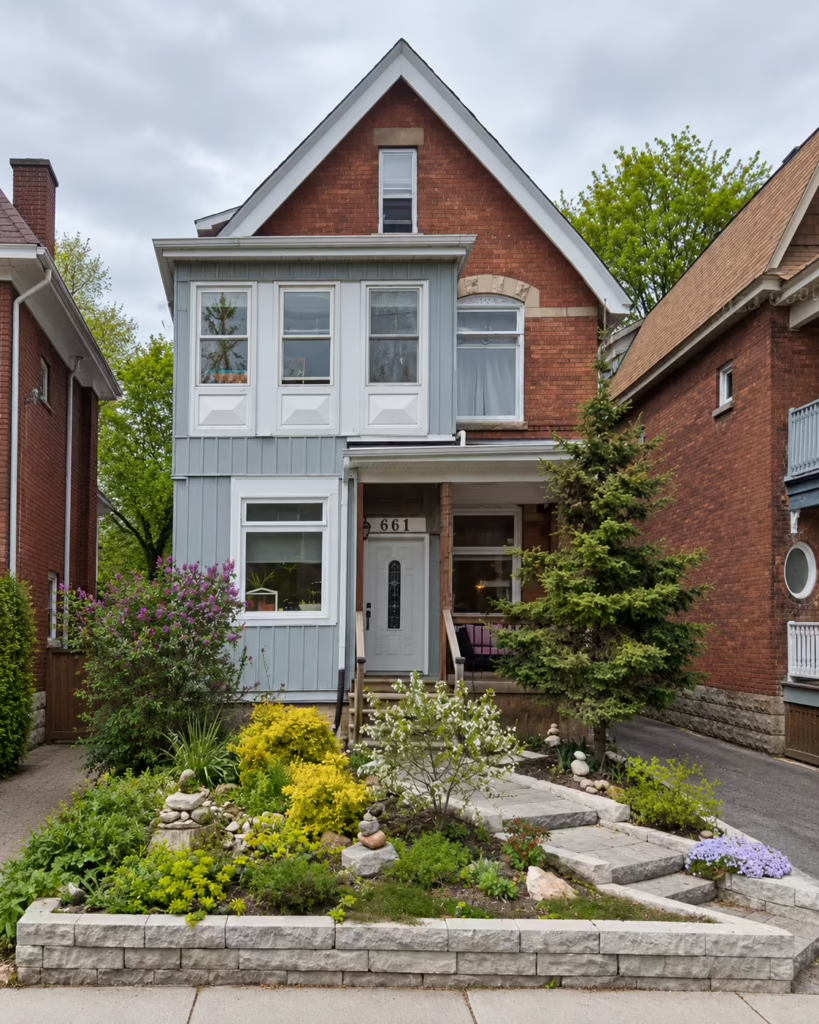
Some of the buildings connected with Ottawa Gospel Hall still form part of the city’s streetscape. Compare several important meeting places with how those locations appear today.
661 Gilmour Street
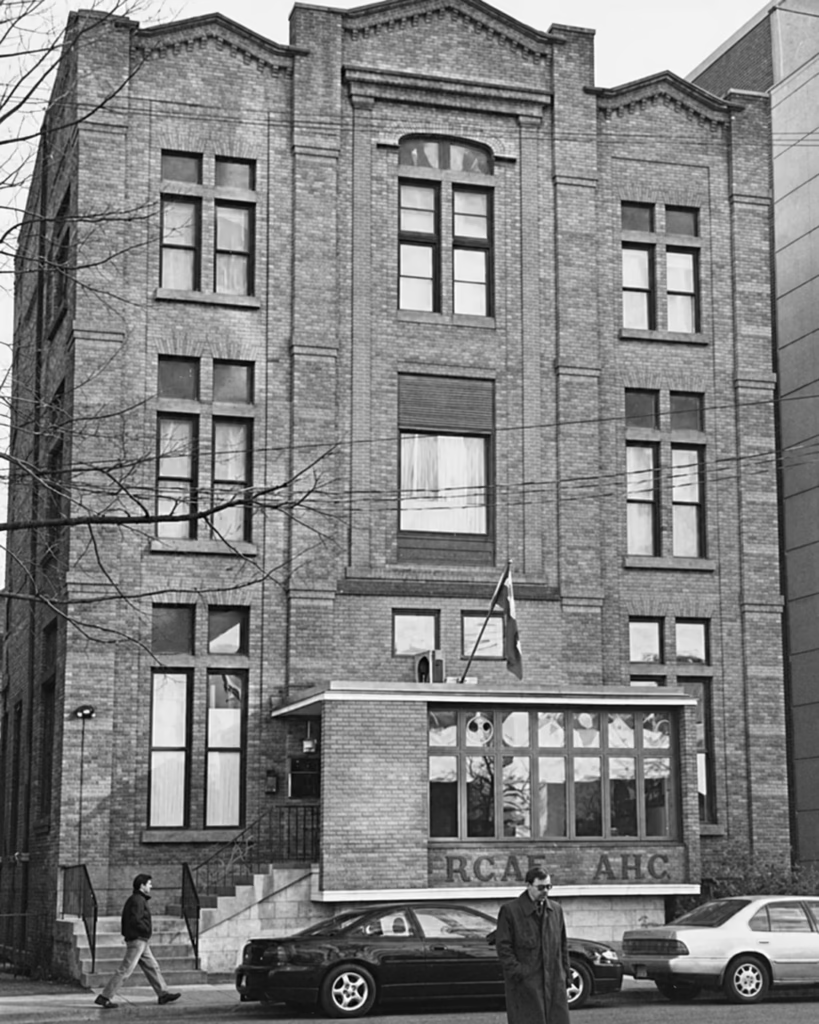
By 1916, the Ottawa assembly was meeting in the home of George Smith. The house remained an important meeting place whenever other accommodation was unavailable.
857 Somerset Street West
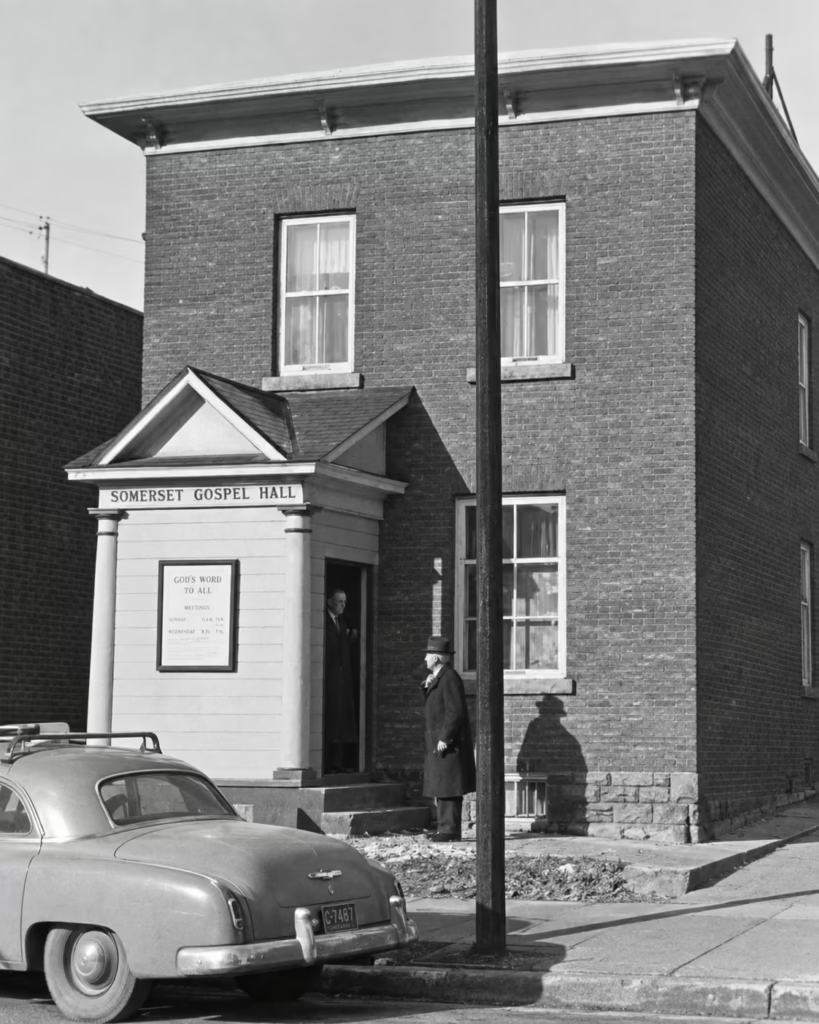
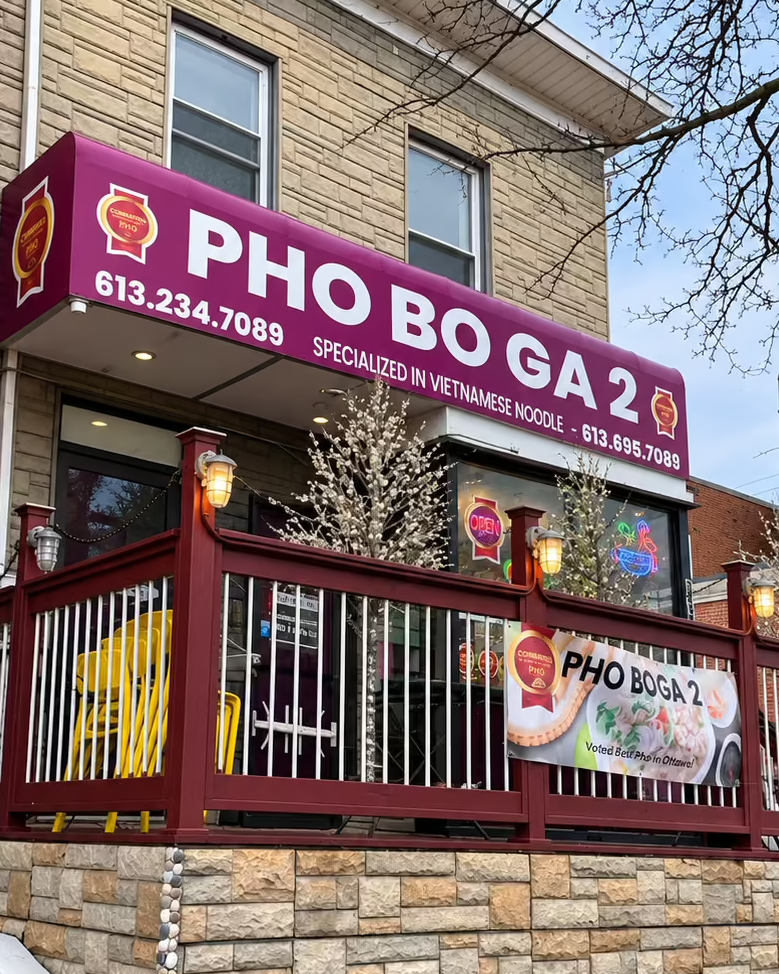
Purchased in 1957, this former residence was adapted as Somerset Gospel Hall. The property remains in commercial use today and has been substantially altered.

1087 North River Road
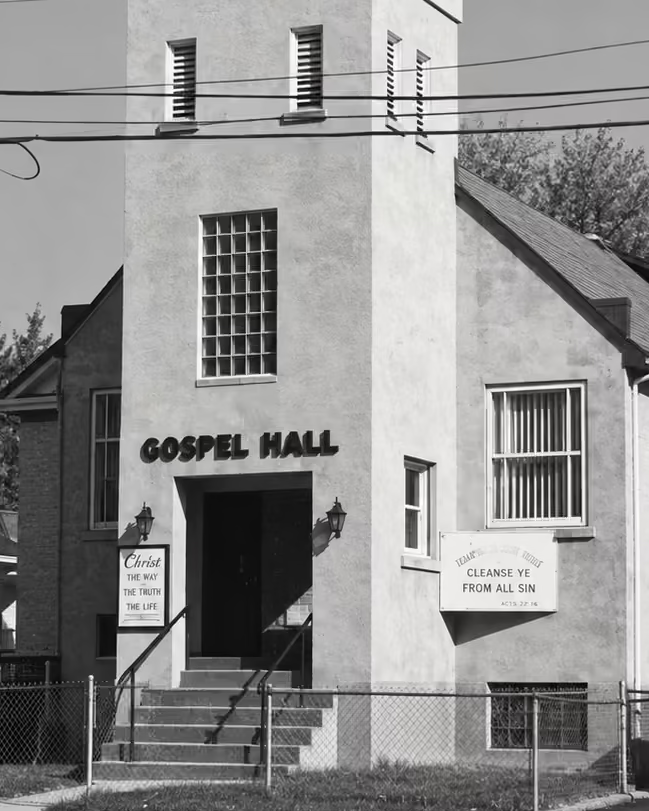
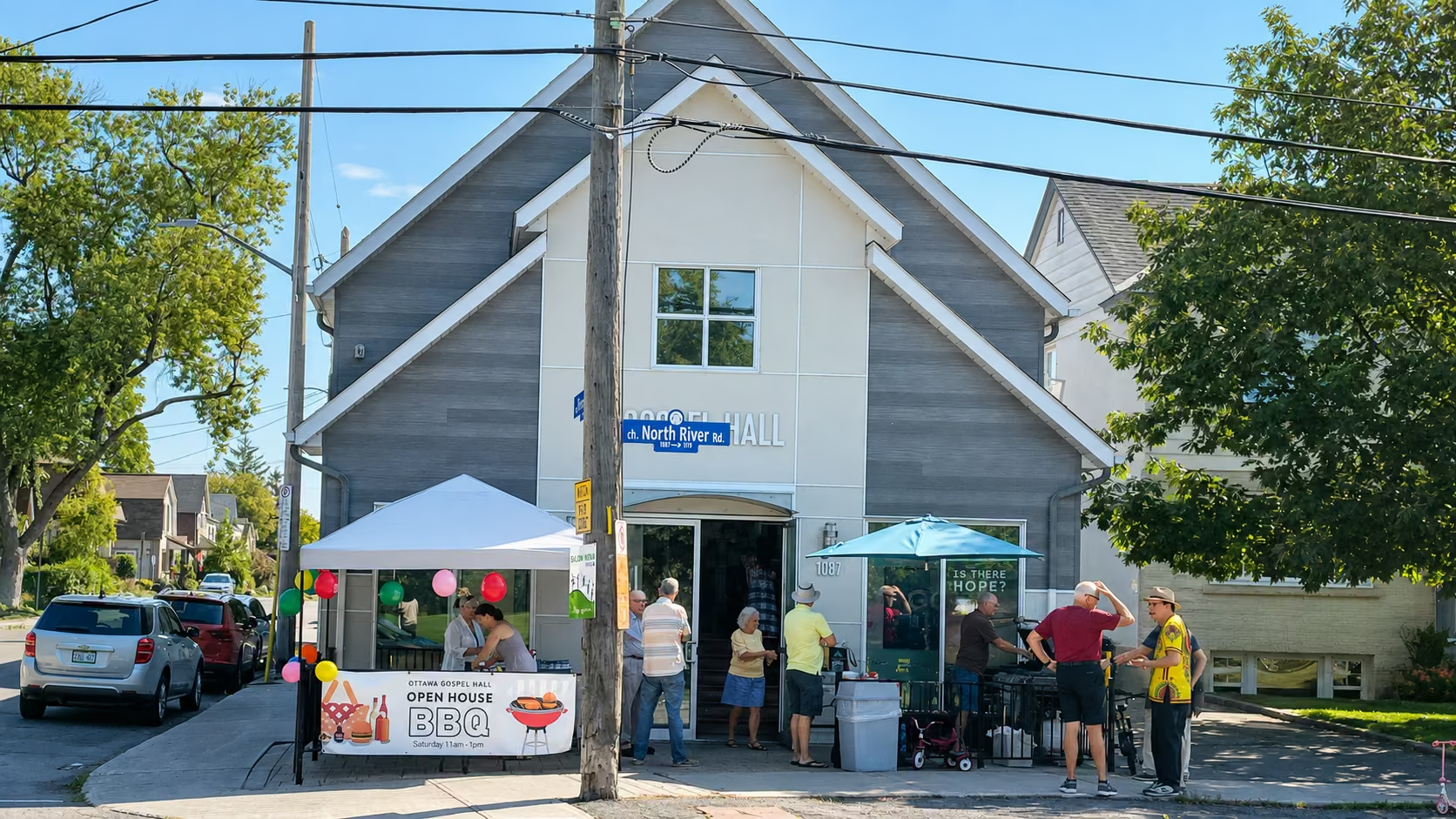
The assembly moved here in October 1964 and has remained at this location ever since. A major renovation and addition begun in 2017 transformed the building and improved its accessibility.
The early years
Early beginnings in Ottawa
No definite founding date can be established for the Ottawa assembly, but the available evidence indicates that the testimony to the Lord’s Name in Ottawa began in the 1870s or early 1880s.
One of the earliest members documented in the surviving history was George Smith, an English immigrant who arrived in Ottawa in 1890 and became closely associated with the assembly for many years. Smith later recalled that the assembly had already been in existence for some time before his arrival.
The earliest known meeting place before 1910 was the old Orange Hall on Albert Street.
In these early years, the assembly appears to have been a small company of believers, with gospel preaching and visiting speakers already forming part of its life.
1870s–1880s
probable beginnings
1890
George Smith arrives in Ottawa
Before 1910
meetings at the old Orange Hall on Albert Street
1910
McLeod Street Gospel Hall built
1910–1916
A Gospel Hall on McLeod Street
Around 1910, the assembly built a Gospel Hall on McLeod Street, near the later location of Hulse, Playfair & McGarry Funeral Home. This gave the believers a more permanent meeting place after the earlier years in rented accommodation.
The historical record notes gospel meetings during this period, including visits by W. H. Hunter in 1910 and 1913 and W. B. Johnson in 1914.
After several years at McLeod Street, the assembly’s circumstances changed and the believers were again meeting in other locations.
By September 1916, the believers were recorded as meeting at 661 Gilmour Street, the home of George Smith.
1916–1939
Meeting in homes and rented halls
After leaving McLeod Street, the assembly entered a long period without a permanent building of its own.
By September 1916, meetings were being held at 661 Gilmour Street, the home of George Smith. Later, the assembly rented space in the Orange Hall at 158 Gloucester Street for Lord’s Day meetings, while other gatherings continued in private homes.
The Gloucester Street location remained an important meeting place for many years. Records from the 1930s confirm that the assembly was still meeting there, with Sunday School and gospel meetings forming part of its regular activity.
The historical record also points to outreach beyond the main meeting place. In 1919, a Bible class or Sunday School was being held on Preston Street near Carling Avenue.
1939–1945
The war years: a time of uncertainty
World War II brought considerable disruption to the Ottawa assembly. The Orange Hall at 158 Gloucester Street was taken over for wartime use, forcing the believers once again to find temporary accommodation.
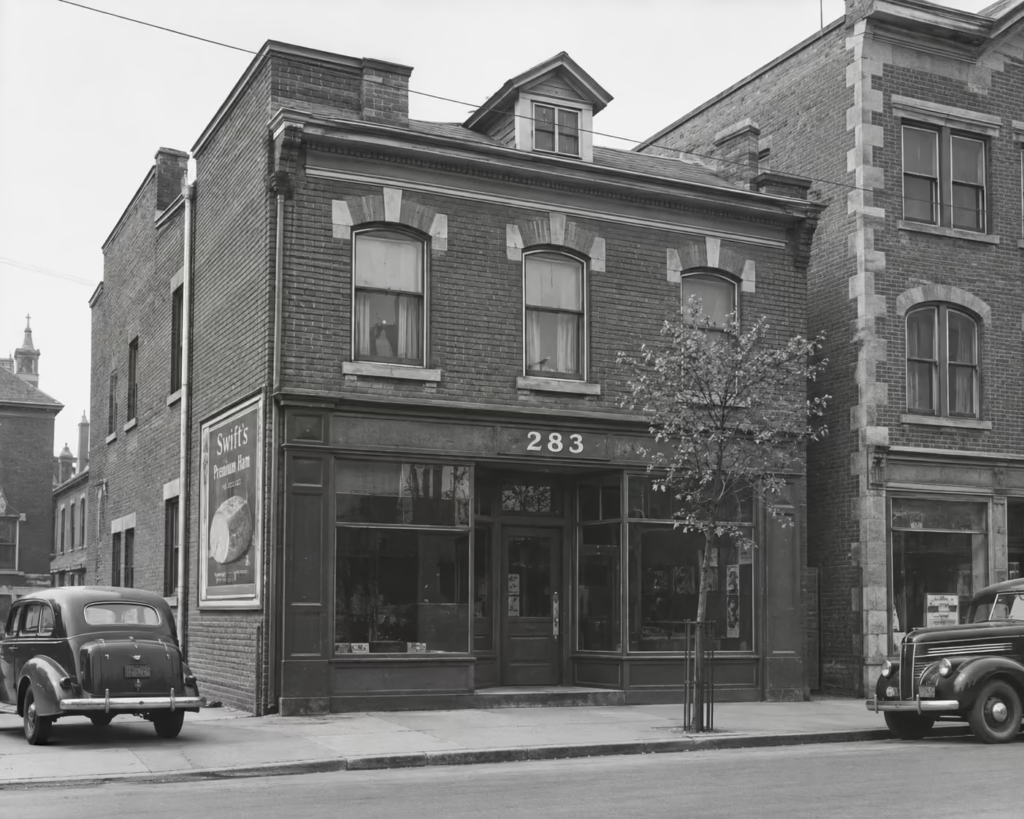
By March 1941, the assembly was meeting in a small second-floor room at 283 Bank Street. The room measured only about 14 by 14 feet and was reached by a long flight of stairs.
That location lasted only a few months. Over the following year the assembly met in several places, including the King’s Daughters Guild on Laurier Avenue, rented storefronts, and private homes. By December 1942, records show the assembly meeting at 780 Bronson Avenue.
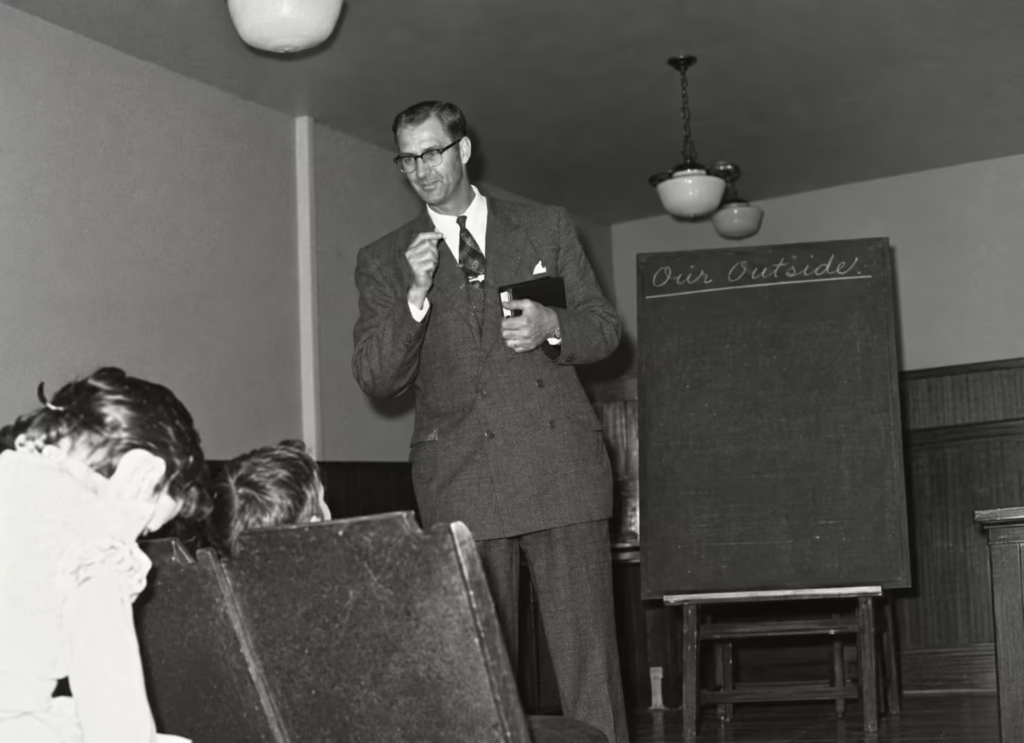
Despite frequent moves and a fellowship reduced to fewer than twenty people, regular meetings and gospel work continued throughout the war years.
1945–1957
Rebuilding after the war
The years immediately following World War II were difficult for the assembly. With wartime workers leaving Ottawa and several older members passing away, the fellowship became very small.
Even so, the assembly began planning for the future. In 1946 or 1947, a building fund was established with the goal of eventually purchasing or building a permanent meeting place.
In 1947, the Ottawa Tract Band was also formed. Over almost twenty years, more than 60,000 hand-addressed envelopes containing gospel literature were mailed into communities across Quebec. Requests for Bibles, New Testaments, and further literature followed, extending the assembly’s outreach well beyond Ottawa.
Around 1947 or 1948, the assembly began renting the Orange Hall on Gladstone Avenue, where Lord’s Day meetings continued until 1957. Sunday School work also developed there during this period.
1957–1964
A permanent home on Somerset Street
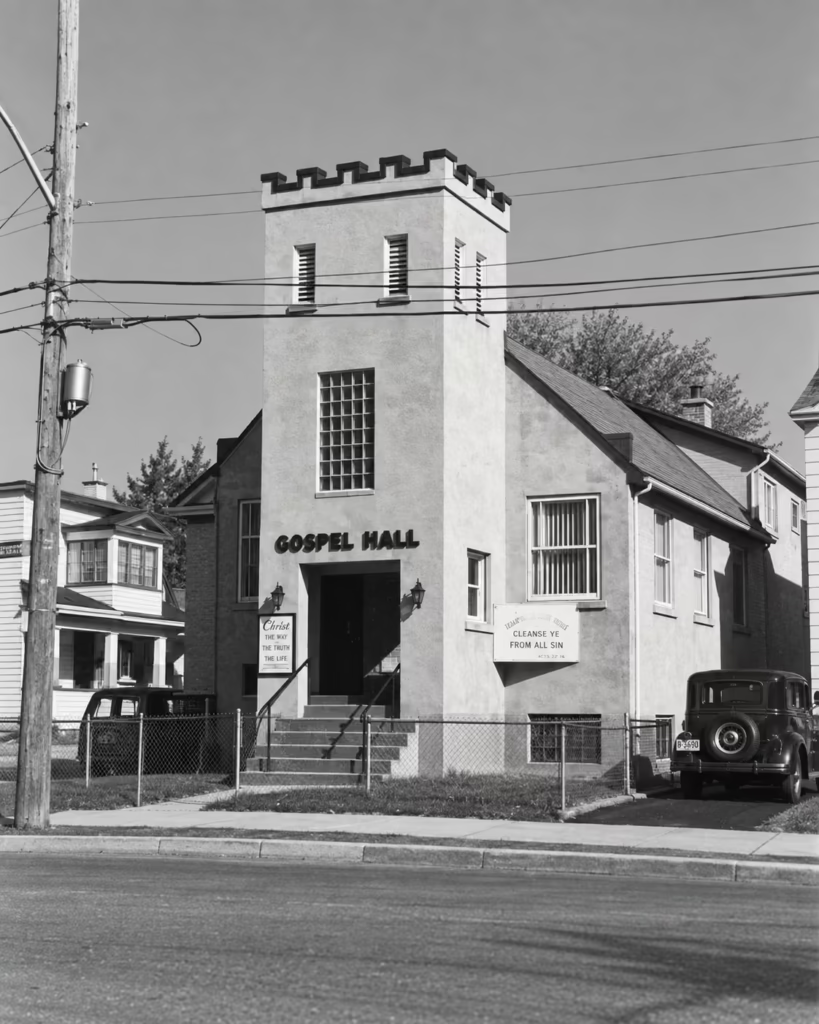
By 1957, the assembly building fund had grown enough to purchase a property at 857 Somerset Street West.
The building had originally been a private home. By removing the partition between the living room and dining room, the assembly created a meeting space measuring about 28 by 14 feet. Renovation work continued through the autumn, and the new Somerset Gospel Hall officially opened in December 1957.
For the first time in many years, the assembly had a building of its own that could be used throughout the week for meetings and other activities.
The first gospel series at Somerset Street was held in June 1958. Over the following years, the assembly grew to the point that the building was no longer large enough. By 1963, special meetings were filling every seat, with some people sitting in the hallway and kitchen.
1964–present
The move to North River Road
By 1964, the Somerset Street building had become too small for the growing assembly, and a search began for larger premises.
That summer, a small church building at 1087 North River Road, at the corner of Prince Albert Street, was offered for sale. The property was considered suitable, and an offer was made contingent on the sale of 857 Somerset Street West.
The Somerset property sold quickly. Because the North River Road building was not available until October 1, the assembly used temporary accommodation at the Canadian Legion Hall, 330 Kent Street, during September.
The assembly then moved into 1087 North River Road, and the new Gospel Hall was officially opened on October 18, 1964.
The building was subsequently improved to better serve the assembly’s needs, including kitchen upgrades, expanded facilities, and the construction of a baptistry in preparation for the first conference held there in October 1965.
2017
A major renovation and addition
In 2017, Ottawa Gospel Hall undertook a significant renovation and addition at 1087 North River Road. The project expanded and modernized the building while retaining the existing hall.
The architectural plans included a new addition, improved accessibility, a lift, new foyer and vestibule space, an accessible washroom, additional storage, and a communal space. Exterior work also included a new canopy and improved access from the sidewalk.
The project substantially changed the appearance and functionality of the building, preparing it for continued use by the assembly and its outreach ministries.
Temporary home during renovations
Hardini Centre, 235 Donald Street · September 2017–March 2018
During the renovation, the assembly temporarily moved its meetings to the gym at the Hardini Centre, 235 Donald Street. Meetings there began on September 2017, while work continued at North River Road. Regular meetings resumed at 1087 North River Road in March of 2018.
Ottawa Gospel Hall today
Still Meeting at
1087 North River Road
Today, Ottawa Gospel Hall continues to meet at the North River Road location the assembly moved to in 1964. The building has changed considerably over the years, but it remains the centre of the assembly’s regular meetings, Bible teaching, gospel outreach, Sunday School, and community activities.
More than a century after the earliest surviving references to the Ottawa assembly, the purpose remains the same: to gather in the name of the Lord Jesus Christ, uphold the teaching of Scripture, and make the gospel known in Ottawa.