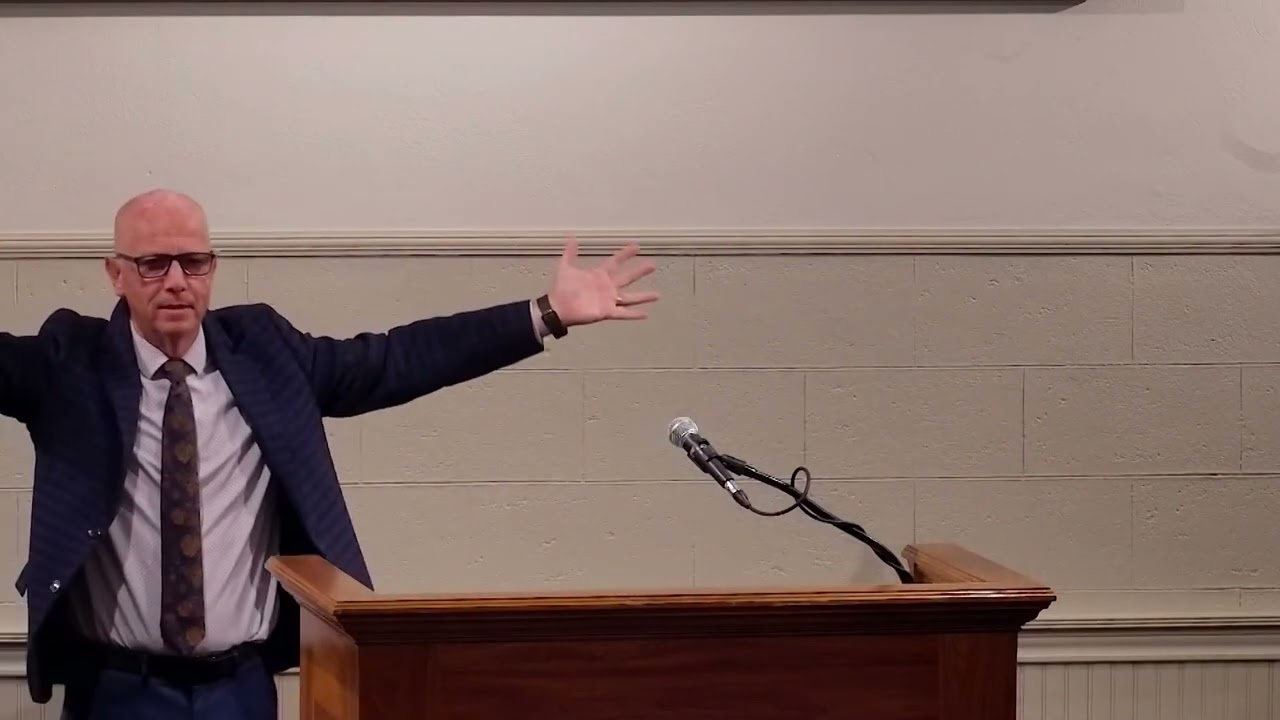
Yes. God’s love does not depend on people loving Him first. John 3:16 describes His love for a world that rejected His Son. Jesus’ crucifixion demonstrates both humanity’s rejection and God’s willingness to provide salvation. That love reaches each individual, while the promise of everlasting life is received through believing in Christ.
John 3:16
20 mins
John 3:16: God’s Love Is Personal
John 3:16 speaks of God’s love for the world, but its promise reaches the individual. This message explains Jesus’ conversation with Nicodemus, why God gave His Son, and how a person receives salvation through trusting Christ.
Message Summary
Q&A
Questions answered in this gospel message
Watch short video excerpts addressing some of the core questions from this message.
-
Question
01
Does God Love People Who Reject Him?
Key Answer
-
Question
02
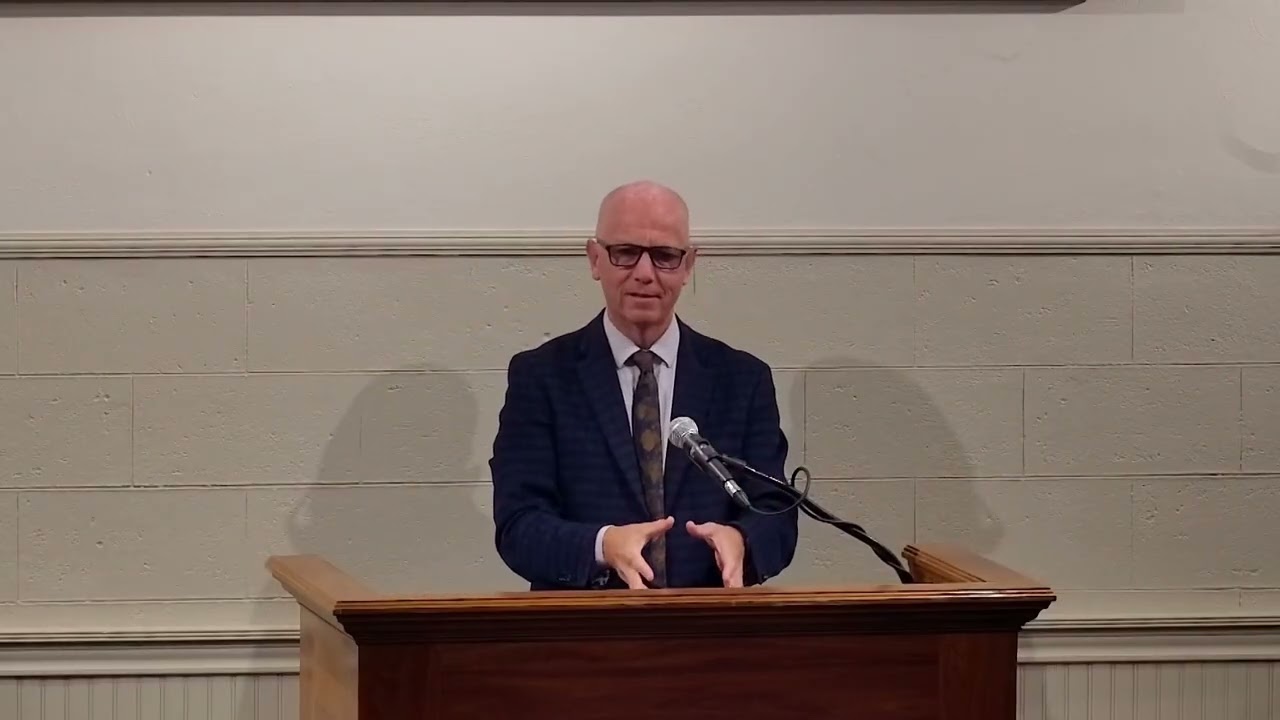
How Do You Receive God’s Gift of Salvation?
Key Answer
Salvation is received by trusting Jesus Christ, rather than earning God’s acceptance through good works or religious effort. Jesus paid the cost through His death on the cross. Receiving this gift means acknowledging your sin and taking God at His word: whoever believes in His Son has everlasting life.
Full Sermon Transcript
John 3:16: God’s Love and Everlasting Life
We’re going to read tonight just one verse, a verse that’s quite well known: John chapter 3 and verse 16. It’s on page 1639 in the Bible you might have borrowed from the back. John chapter 3 and verse 16.
It says this: “For God so loved the world that he gave his only begotten Son, that whoever believes in him should not perish but have everlasting life.” And then we’re going to spend some time just looking at some basic words that are found in that verse. You’ll see them written there in the middle of the screen: that God loved you. He proved it by giving his only Son. If you believe him, you will not be in hell. You will have everlasting life.
Maybe you ask the question, “What is it about this verse? What’s so special about this verse?” Just a few words. How come sometimes you’re driving down the road and you’ll see a sign on the side of the road that says John 3:16? Maybe you’re at an event somewhere and somebody will hold up a placard or a piece of cardboard for the camera as it’s moving its way across the audience, and on that card will be written John 3:16. Maybe you’ve been watching an event online and you’ll see written in the sky, in fireworks or with a drone, John 3:16. What’s so important about John 3:16?
What is it that causes individuals to memorize that verse? I’ve met people that had been through tremendously difficult times. I said to them, “Do you know John 3:16?” And they’ll think for a second and they’ll say, “God so loved the world that he gave his only begotten Son.” Maybe you’ve got to prompt them a little bit. Who is it for? “That whosoever believes in him will not perish but have everlasting life.” Maybe you’ve looked over and you say, “Well, it’s on the wall as well.” John 3:16.
And over and over again, as you read those little words, you ask yourself, “What’s so important about it?” Listen, tonight there are people all over the world that have read this verse. And this verse is extremely special to them because, as they read this verse, they realize, like Cullen was telling you, their sin separated them from God. And God gave his Son to come into the world and die on the cross for sin, and they trusted him and they were saved.
And if you have a computer, if you were to go to heavenforshure.com, you would find all kinds of stories about people who trusted Christ as their Saviour. And many of them were through John 3:16. Again, maybe you say, “So what’s so important about that verse?” Well, God says that that verse, those words, are words through which a person can be saved, can trust Christ as their Saviour, can know their sins forgiven.
The Context: Jesus Speaks to Nicodemus
But for you to understand that little verse tonight, you have to think a little bit about what went before the verse, right? Sometimes somebody says something to you and it just seems so random, and you say, “Well, what’s the context? What does it actually mean? I have no idea what you’re talking about. Give me the context surrounding what you’re saying so I can begin to understand what you mean.” Well, if you read John chapter 3 when you go home tonight, if you have a Bible, just read John chapter 3. It’s a great chapter.
See, in John chapter 3, Jesus Christ is speaking to people just like I’m speaking to you tonight. So this real man, this individual who came from God, who is the Son of God, Jesus Christ, he’s talking to a man named Nicodemus. And Nicodemus was a man that was extremely well known in his town. He was a religious man. He was a self-righteous man. He was a well-educated man. He had wealth. He had all the things that you would think a person would want. Why would they possibly want to come to talk to this man who had no home of his own, no assets in the bank, nothing really that belonged to him? Why does he come and talk to Jesus?
Because this educated, religious man knew there was something missing inside his heart. And he comes to Jesus and he begins to speak to him. And as he talks to the Lord Jesus, the Lord Jesus tells him, “You need to be born again. You must be born again.” And this educated, religious man is trying to understand, “What do those words mean? How can I be born again? I’m already old. Do I have to go back and once again become a little baby and be born into the world like I was the first time?”
And Jesus says to him, “I’m just giving you an example of what it means to trust Christ.” And then he says, “You’ll remember a story from way back that you first learned in the Old Testament, the first part of the Bible, of how the Jewish people were in the desert. And as they travelled through the desert, there were poisonous snakes that came in and bit them. And the people began to die because of the poison from the snakes in their system.” And God told their leader Moses, he said, “Make a snake and lift the snake up and tell the people, if you look to the snake, if you look at that snake, that serpent on a pole, the disease that’s in your body, the poison coursing through your veins, it will be immediately eliminated. If you look, you live.”
And then Jesus Christ comes to this verse, and he says to this man, “Just like that snake needed to be lifted up for the people to live, the Son of Man, Jesus Christ, me, myself, the Son of God, Jesus, has got to be lifted up on a cross. And if you look to him and trust him, you’ll be saved.” And then John 3:16, he says to this righteous, religious man, “For God so loved the world that he gave his only begotten Son, that whosoever believes in him will not perish but will have everlasting life.”
“For God”: The God Who Knows Us and Cannot Lie
You see, tonight our message, these two messages that you have listened to, maybe they’re a little different than what you’re used to hearing. That’s okay. The question to ask yourself is this: Is it from the Bible? And if it is, then is it true? Well, the Bible is the source of truth that God has given. And if you look at this little verse that I’ve been quoting to you tonight, you notice it starts off with that: God. “For God.”
I don’t really know what it is that you believe about God tonight, but when I think about God, the eternal, majestic Creator God, the God of eternity, the God who always existed, the all-powerful One, the One who knows the very innermost thoughts, knows exactly what you and I are thinking right now. And some of you are maybe thinking, “How much longer till it’s over?” Others may be thinking, “This is really strange. I’m not sure about this.” But regardless of what you’re thinking, the God of heaven knows the innermost thoughts going through my mind and through yours. He knows every detail of who we are. He knows from the very beginning to the very end. It’s the God of eternity. That’s the One that this verse says: “God so loved the world.”
You see, one of the things about God that I love is, for him to be God, he cannot tell a lie. He can only tell the truth. You see, if he could tell a lie, well, then he wouldn’t be God. And maybe in our context, in this world that we live in, we say to ourselves, “Yeah, but lies are really no big deal. They’re just little things that sometimes smooth out the daily activity. It’s just a little untruth that really doesn’t matter.” See, that’s how you and I begin to understand and think about sin. But God says that every single lie is a sin against him. And God can’t lie. And this God of absolute truth, this God that can’t lie, this is the God that says that he loved you.
“So Loved the World”: God’s Love Is Personal
See that second word that I’ve read tonight, that “God so loved the world.” It’s not just that he loved the world. It’s amazing to be part of a group when something’s going on, right? No one likes to be isolated, to be off by themselves. It’s kind of nice just to be part of a group. If you were just sitting in this gospel meeting tonight and it was just you and me, you might feel a little uncomfortable. But when it comes to this message of salvation, when it says “God so loved the world,” it means that he loves every single person ever born into this world, but it’s individual. God loved you.
And Alex Mazerell, when he spoke last Sunday night, I told him after the gospel service, if you weren’t here last Sunday night, go on our website. You can listen to that message again. Alex told us that often love in our world is very conditional. You do something that I like, so I love you. If my love is not reciprocated by the person I’m loving, that love can begin to wane, can begin to die, because we sometimes see love in our world as very transactional. That is not how God loved. God’s love is not transactional. God’s love is absolutely pure, completely focused. He loved me when I didn’t love him.
He loved individuals who were going to reject him. The soldiers that took him and put him on the cross and crucified him, whether they knew it or not, he loved them. That love of God went so far that he’s prepared to give the Lord Jesus Christ to be the sacrifice for sin.
What would you sacrifice for someone that you love? You know, in the world that we live in, we quite often aren’t faced with that kind of black-and-white situation. In other countries, people often are. How much will they sacrifice for the person that they love? How far will they go to help and to protect, to preserve the life, the well-being of someone they love? But again, remember, it’s someone they already know. It’s someone they expect will be appreciative of that love they’re showing to them.
“God so loved the world.” That world’s intention was to take his Son and crucify him. You see, God knew exactly what was going to happen when his Son came. He knew that the people, the individuals, would take him and they would nail his hands and his feet and they would crucify him. And yet, God so loved the world.
“He Gave His Only Begotten Son”: The Cost of Salvation
You know, it says that he gave. When I think of what it means that God gave his only begotten Son, it tells me he gave the very most unique being we could possibly imagine. It wasn’t that he had a million to choose from and he took one of them and said, “I’ll send that one.” He had one, and he loved you and me to the extent that he gave that one to come into the world to go to the cross. And it says that God so loved the world that he gave his only begotten Son.
You know, there’s something else that it reminds me of when I think of that story. When you and I are going to do something for somebody else, we often think about what are the consequences if we don’t do it right. Maybe you need to rescue somebody, and maybe there’s going to be some expense, some cost to yourself of rescuing that person. We stop and think, “Well, what if we just didn’t do it? How bad would the consequences be?” See, when I realize that God gave his Son, it tells me the consequences of that not happening must have been so tremendous that God was prepared to give the very best of heaven.
Repentance: Seeing Sin as God Sees It
Cullen has been touching on those consequences. I mentioned earlier, you’ll maybe remember I said, you and I, when we think about a lie, we think it’s really no big deal, right? It’s maybe just getting along. It’s maybe just smoothing out the day. It’s better if they don’t know what actually happened. Just a little, well, sometimes they call them little white lies, right? The ones that don’t matter so much. How does God view sin?
See, Colin spoke a bit about repentance. You see, for me to understand repentance, it means this: I step aside and I look at my sin like God does, and I realize, in all of its awfulness, in all of its horror, that sin is separating me from God. One sin is so bad. Really, could that really be true? That one sin, one little thing that you and I might do wrong, is so bad that the Bible says, “The wages of sin is death.”
But you see, for me to understand that, I’ve got to think about the fact that God was prepared to give his Son. Because the consequences for sin were so awful that if God didn’t give his Son, the punishment would be unbearable for you and me, because our sin is a horror to God himself.
When I step over here and I look at my sin, that’s what repentance is. I see it like God does. I don’t try to justify it. I don’t try to call it some little thing that might have happened. It’s not a mistake. It’s not a slip. It’s not a little fall. It’s sin. And that sin separates you and me from God. And it can separate us for eternity. Because of that, God so loved the world that he gave his only begotten Son.
“Whosoever Believes”: How to Receive Salvation
How do you get it? How do you get this salvation that I’m talking about? That’s what Nicodemus was asking Jesus Christ. How can a man be born again? How can it possibly happen? What does it mean when we speak about being saved? What does that mean? It means this. It means I come to God saying, “I’m a sinner. I deserve to be in hell. Jesus Christ came into the world to save sinners. Because he came, my sin can be paid for. I take God at his word. I trust him and I’m saved.”
How do you accept a gift? Well, for there to be a gift, someone has to pay for it. I like Christmas. I don’t like the bills that go with Christmas. But you can’t give a gift if no one pays for it. This gift that God has given, who paid for it? Well, Jesus Christ did. When Jesus Christ died on the cross, he paid the price that no one else could ever pay. And that gift was paid for. And then God offers that gift of salvation.
If we were trying to do something to get that gift, we would just take away from what God has done. God says, “Just reach out and take it and it can be yours. Just trust the Lord Jesus Christ and you will be born again.” That’s what Nicodemus had to find out. You’ll be saved. You’ll be born again. You’ll have eternal life.
“Not Perish, but Have Everlasting Life”
Can God lie? Absolutely not. And the God who cannot lie says he gave his Son that whosoever believes on him, it says, will not perish but have everlasting life. You see, in this message of the gospel, there’s only two options, right? There are those who will perish, which just means to lose your life, to lose your eternal security, to be separated from God forever, to bear the punishment of your sin because you’ve never trusted Christ. You see, it’s perish or it’s life. And what God offers tonight is unlimited, boundless, eternal life. And he says, “He that believes on my Son will have everlasting life.”
A Life Changed Through John 3:16
Back in the nineteenth century, there was a young man named Henry Moorhouse. Henry grew up in a home where people were religious. He learned about the Bible. He learned about God, and he wanted absolutely nothing to do with it. And as soon as he could leave home, he went out to enjoy all of the things, like this young man that Cullen was talking about, and he enjoyed life. But what he found was sin after sin after sin left him feeling hopeless and empty and with a gap inside that he could not fill, to the point that at times he was prepared to take his own life, because he said life is not worth living.
One night he walked into a little building like this in Manchester, England. And he sat and he listened as an individual spoke and said, “Jesus Christ came into the world that an individual can be saved.” Henry Moorhouse trusted Christ. Do you know what his favourite verse was? John 3:16. And for years he preached to thousands of people, and hundreds of people trusted Christ. The fact that God so loved the world that he gave his only begotten Son, that whosoever, that if you will just believe in him, you will be saved.
Scripture quotations outside the historical sermon transcript use the New King James Version®. Copyright © 1982 by Thomas Nelson. Used by permission. All rights reserved. . The transcript preserves the wording used by the speaker.
Key scripture
For God so loved the world that He gave His only begotten Son, that whoever believes in Him should not perish but have everlasting life.
John 3:16