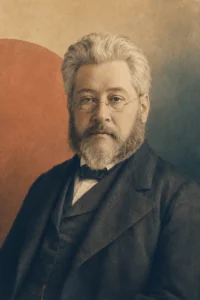
Jesus Christ did not die because of sins He had committed. He was the perfect, sinless Man who willingly suffered in the place of sinners. At the cross, He bore our guilt and curse so that everyone who believes in Him may receive everlasting life.
John 3:16
32 mins
What’s Missing in Your Life? A Gospel Message on Sin and Salvation
Feel like something’s missing in life? Discover why the gospel matters — and how lasting satisfaction is found only in Jesus Christ (John 3:16).
Message Summary
Key Moments
Key moments from this message
The moments where Scripture opened and the gospel came clear — each with a short clip you can share.
-
01
Christ Bore the Curse We Deserved
-
02
Condemnation Is Humanity’s Default Condition
Every person enters the world with a sinful nature and confirms that condition through personal sin. Condemnation is therefore not merely a future possibility; it is humanity’s present spiritual condition apart from Christ. That condition can be changed through faith in the One who died in our place.
-
03
God Takes the Initiative in Salvation
Scripture teaches that no one naturally seeks after God. When a sinner begins to recognize a spiritual need, it is evidence that God has already taken the initiative through His Word and the gospel. Salvation begins not with humanity reaching up to God, but with God graciously reaching down to humanity.
-
04
Why Success, Wealth, and Relationships Cannot Fully Satisfy
People pursue education, wealth, work, possessions, and relationships because something still feels missing. These things may be good, but none can provide the complete satisfaction the soul seeks.
The deepest hunger of the human heart cannot be answered by another worldly attainment.


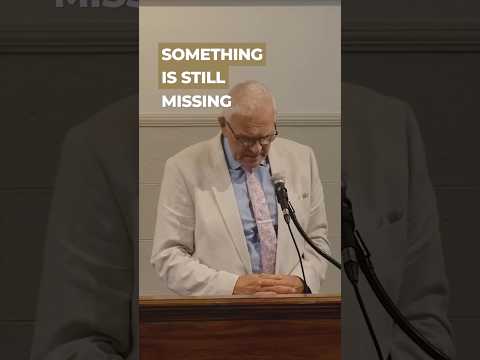
Full Sermon Transcript
Why Is the Gospel So Significant?
Why is the gospel so significant to you and to me? Interesting, isn’t it, that it’s brought you to a gospel meeting, or caused you to tune in to our online broadcast tonight?
I believe the answer, if we really ponder it, is this: we are all born knowing that something — or someone — is missing in our life.
Just think about it. Why do we all strive for something, or look for someone, to satisfy our yearnings? We set educational goals. We seek wealth. We seek positions in employment. We seek possessions. We seek a spouse. You name it. Why? Because something, or someone, is missing.
Worldly attainments — things, or even relationships with other people — are wonderful. But they do not bring total satisfaction. If I could only find what’s missing, I’d be truly satisfied.
Well, friend, we have good news. The answer to this question is found only in the gospel — God’s good news of salvation through the person of His Son, the Lord Jesus Christ.
In the Beginning: God’s Design for Humanity
Now, to properly understand this issue of a lack of satisfaction, we need to go back to the beginning of humanity.
In the first book of the Bible — the Bible, as we were mentioning earlier today, contains 66 books, a little library that we carry around with us. What a wonderful library it is. The very first of the 66 books is called the Book of Genesis, which means beginning.
In that first book we read that Almighty God spoke, and things were made by the word of His power. The mighty Creator, with a word, put galaxies by the hundreds and planets whirling and spinning into orbit, each of them unique. He created the stars also.
Then, for His own sovereign reasons, God focused His attention on one small speck of cosmic dust called Earth, and began the wonderful week that’s recorded in Genesis one and Genesis two — principally Genesis one. That wonderful week of creation, He transformed that speck of cosmic dust into a beautiful, fruitful planet.
On this planet He chose to place humans, our original parents. He created them with a mind — why? So they could choose to know Him, to know God. A will, so they could choose to obey and serve Him. And emotions, so they could choose to love Him and receive in return His love from Him to them. This way there could be a joyful fellowship between God and man.
So humans were made by God in His image — with a body, a soul, and a spirit. The body makes us aware of where we are. The soul makes us aware of who we are. The spirit makes us aware of who God is. Humans were placed on this beautiful earth, in the Garden of Eden, to love and enjoy God forever.
Now Adam and Eve possessed honor, innocence, fellowship, joy, love. To me, those are the very attainments that really could satisfy.
The Fall: When Sin Entered the World
But Genesis three tells us sin came in, and man failed. Immediately their mind became dark. They were separated from God in their souls by sin, and spiritual death separated them from the One who loved them supremely.
I don’t think we could imagine a more tragic day than that — for Adam and Eve, ones who possessed honor, innocence, fellowship, joy, and love, and then absolute darkness in their relationship with God, because that relationship was severed by way of sin.
God’s Response: He Did Not Abandon His Plan
But God, who is love, did not abandon His plan in frustration, because in His omnipotent omniscience — which means His all-knowingness, His all-knowledge — He knew what was going to happen. God would open a way back to Himself from the dark paths of sin.
Jesus Christ said, “I am the way, the truth, and the life. No one comes to the Father, no one establishes that fellowship with God the Father, except through Me.”
This way that God would provide would not be for a chosen few, because God is fair and God is righteous. It would be open for whosoever, and made on the easiest possible terms.
So God determined He would come to us and reveal to us what God really is — the God who satisfies.
In Genesis three, that chapter of tragedy, where Satan comes into the garden and Adam and Eve sin — immediately after they had sinned, and that darkness had descended upon them, there was an immediate change in their relationship. The joy is gone. Instead of joy, there’s fear. Instead of love, there are feelings of guilt that weren’t there before — new feelings, and not good ones. It’s not a good experience. But there’s something of interest here.
“Adam, Where Are You?”
The God who is omniscient, who knows all things, knows what they’ve done. He comes into the garden and He says, “Adam, where are you?” Where are you?
God has taken the initiative to reach out to Adam and Eve. And God has taken the initiative, reaching out to men and women, boys and girls, through His Word, through the preaching of the gospel — like you’re hearing tonight.
The First Gospel Promise
Isn’t it interesting that in Genesis chapter three and verse fifteen, we have the first gospel message? What a wonderful message: “The seed of the woman shall bruise the serpent’s head, and the serpent would bruise His heel.” What is God saying? If we look down through the centuries to God’s wonderful plan, we find that a virgin would conceive and bear a Son. He would be the Saviour of sinners, who would destroy the devil and sin. The first gospel message ever preached — preached by God Himself.
And it’s so wonderful that God took the initiative. Dear friend, do you realize this? You’re not here by chance tonight in this gospel meeting. You’re not listening online by chance. God has taken the initiative. He’s reaching out to you through His Word, the living Word, to reveal to you your greatest need, and how that need can be satisfied in Christ Jesus. And you can become satisfied.
Sin came into the human experience in Genesis chapter three, and as a result, all humanity has been separated from God because we are sinners who have committed sin offenses against Him. Listen to the words of Isaiah sixty-four and verse two, familiar to us in the preaching of the gospel: “but your iniquities…” What does that word mean? Iniquity is your complete disobedience. Your moral corruption has separated you from God, and your sins have hidden His face from you.
But praise God — the God who loves us has provided a salvation for our sins, through the sacrifice of His Son, the Lord Jesus Christ.
Five Words to Remember: Love, Look, Life, Liberty, Light
Now, there are five words I want you to put on the sticky side of your brain and keep them there. Five things tonight. Five words, all starting with L, and we’re going to look at them in the time that remains. These words are:
- Love
- Look
- Life (Live)
- Liberty
- Light
Very, very simple.
So let’s begin looking at the Word of God, the Gospel of John, chapter one, and verse one.
Light: Jesus Christ, the Light of the World
“In the beginning was the Word, and the Word was with God, and the Word was God. He was in the beginning with God.” (John 1:1–2)
This is, of course, a title for the Lord Jesus Christ. In the beginning was — we might say — the Lord Jesus Christ, and the Lord Jesus Christ was with God, and the Lord Jesus Christ was God. He is one of the Triune God. He was in the beginning with God. All things were made through Him, and without Him nothing was made that was made. And so He is involved in the creation.
“In Him was life, and the life was the light of men. And the light shines in the darkness, and the darkness does not comprehend it.” (John 1:4–5)
And look down at verse nine: “That was the true light which gives light to every man coming into the world. He was in the world, and the world was made through Him, and the world did not know Him. He came to His own, and His own did not receive Him.” (John 1:9–11)
But this is wonderful — verse twelve: “But as many as received Him, to them He gave the right to become children of God.” (John 1:12) If you became a child of God tonight, what would that be like for you? Well, it would be restoring fellowship with God. If you’re not saved — if you’ve never trusted Christ as your Saviour — you don’t have fellowship with God. But that could change tonight, through believing in Him. That would restore fellowship — becoming children of God “to those who believe on His name” — believing on His name, trusting in Him. The simplest of terms. That’s what God requires. Not some majestic work, not some overpowering thing you have to try to do, some penance you have to pay — the simplest of terms: believing in His name.
And what would be the result? “Born, not of blood, nor of the flesh, nor of the will of man, but of God.” (John 1:13) Spiritual birth. God would give you spiritual birth, because what happened in the garden in Genesis chapter three was spiritual death. Adam and Eve’s relationship with God was severed because of sin.
Come to the Light
So in this portion we’ve been looking at, we see that the Lord Jesus Christ is the Light. He’s the Light that shines in darkness. Remember that tragic day, and how darkness came into the souls of Adam and Eve? There’s darkness in our souls without Christ. But the Lord Jesus Christ is the Light — the Light that shines in the darkness.
In John eight and twelve, Jesus spoke these words: “I am the light of the world. He who follows Me shall not walk in darkness, but have the light of life.”
I’ve been recently enjoying one of our hymns, and it was this one: The light of the world is Jesus. The whole world was lost in the darkness of sin. The light of the world is Jesus, like sunshine at noonday, His glory shone. The light of the world is Jesus.
God not only identifies His Son as being the Light of the world, but He invites everyone — including you and including me — to come to the Light. Come to His Son, and believe in His Son for salvation.
Matthew eleven, twenty-eight — the Lord Jesus says these very words: “Come unto Me, all you who labor and are heavy laden, and I will give you rest.”
And the hymn continues: Come to the light, ’tis shining for thee. Sweetly the light has dawned upon me — this is a confession from my own soul — once I was blind, but now I can see. The light of the world is Jesus. Is my Light. Is it your Light? Is the Light that satisfies?
Psalm 107 and verse 9 says, “He satisfies the longing soul and fills the hungry soul with goodness.”
So — our first word: Light.
Love: For God So Loved the World
Now let’s turn to a very well-known verse, John chapter three and verse sixteen:
“For God so loved the world, that He gave His only begotten Son, that whoever believes in Him — the simplest of terms — should not perish, but have everlasting life.”
God sent His Son. Why? Because God is love, and God loves you, and you are included in that word “world.” It’s speaking of the world of humanity. There’s no favoritism. There’s no discrimination. It’s not just for a select few — God’s salvation is for all.
And though Jesus Christ came to earth in human form, we must remind ourselves He’s not exactly like us. He took on human form, but He’s different from us, because He is God manifest in the flesh. The Lord Jesus Christ never sinned. He could not sin. He came as the perfect Servant to do the will of God, to provide salvation, as we see here: “Christ Jesus came into the world to save sinners.” (1 Timothy 1:15)
And the question tonight is: will you take the place of being a sinner? The place, by the way, that God gives you in His Word.
None Righteous, None Seeking
We’re reminded of that in Romans chapter three: “There is none righteous, no, not one” — not one righteous. There was only one righteous Person, and that was the Lord Jesus Christ. He is God manifest in the flesh, but in the personage of humanity. There’s not one righteous, no, not one.
Not only that, but Romans three and eleven tells us, “None seeks after God.” So the very fact that you are here in a gospel meeting tonight, seeking after God, is because God has taken the initiative and is seeking after you. He wants to save your soul, because God loves you. God is love.
Now let’s look at verses fourteen through sixteen of John chapter three: “And as Moses lifted up the serpent in the wilderness, even so must the Son of Man be lifted up, that whoever believes in Him should not perish but have eternal life. For God so loved the world of humanity, that He gave His only begotten Son, that whoever believes in Him should not perish but have everlasting life.” Wonderful verse.
Verse seventeen: “For God did not send His Son into the world to condemn the world, but that the world through Him might be saved. He who believes in Him is not condemned, but he who does not believe is condemned already, because he has not believed in the name of the only begotten Son of God.”
And this is the condemnation: that the Light — remember, the Lord Jesus Christ is the Light — the Light has come into the world, and men love darkness rather than light, because their deeds were evil. “For everyone practicing evil hates the light, and does not come to the light, lest his deeds should be exposed. But he who does the truth comes to the light.”
So we’ve thought about Jesus Christ being Light. We’ve thought about the love that we’ve seen displayed by God, and displayed by Jesus Christ, to come and do the work that saves your soul. Now we’re going to look at Look, and Life and Liberty.
The Bronze Serpent: A Picture of Salvation
Very interesting, isn’t it, that in responding to this man Nicodemus’s honest interest in salvation — coming to the Lord Jesus Christ on a given night — the Lord Jesus refers to something that had happened many years before, to the children of Israel, as they were wandering from Egypt to the Promised Land. They were in the wilderness, and the people were sinning. They were grumbling against God. They were grumbling against Moses. They were dissatisfied, and they were sinning.
He brings Nicodemus’s awareness to this. In verse fourteen He says,
“As Moses lifted up the serpent in the wilderness, even so must the Son of Man be lifted up.”
What kind of an illustration is this? How is that supposed to bring any clarity to God’s salvation this evening in our gospel meeting? Well, let me try to paint a picture for you.
The children of Israel had sinned. And they came in recognition of their sin. They said, “Moses, pray to God for us — these serpents have come into the camp, these poisonous snakes. They’ve bitten us, and we don’t die immediately, but there is death, and we need to be healed from these poisonous bites.”
So God tells Moses, “Moses, you make a figure of a serpent. Make it out of brass, resembling a snake. And you put it on a pole, and set it in the center of the camp, where the people can see it. And whoever looks upon that pole, with the bronze serpent on it, will be healed from the poisonous snake bite.”
There were people in that camp who wouldn’t look, and they died. There were others who believed the word of God told to the people by Moses — but conveyed to Moses by God — and they looked, believing that God would honor what He said. And He did. And those people were saved from the poisonous snake bites.
Well, what’s that got to do with the gospel? Just this — the Lord Jesus is saying: just as Moses lifted up a bronze serpent on a pole, even so must the Son of Man be lifted up. Who was the Son of Man? That’s a title the Lord Jesus used quite extensively, speaking about Himself. He’s saying, “Nicodemus, I will be lifted up on a pole.”
How is the Lord Jesus like a bronze serpent lifted on a pole? What does it speak of? The bronze serpent reminded the children of Israel, as they looked upon it, of their sins. And what does a pole speak of? The Old Testament says, “Cursed is every man who hangs upon a tree.”
And what did the children of Israel have to do? Look at that pole with the bronze serpent, in faith, and believe what God said. And they would be healed.
Look and Live: Receiving New Life
Friend, that’s what you need to do tonight. If you’re not saved, look and live. Look — what do you look at? You look at Calvary’s cross. We’ve been singing about Calvary. There was life in the look at the Crucified One.
What do you see, if you look in your mind’s eye to Calvary? We’ve all seen images and scenes of Calvary by artists, or some representation of it — we see a Man hanging on a cross, nailed upon a cross, hands and feet nailed, a crown of thorns upon His head, blood flowing down from wounds inflicted upon Him by people who hated His person.
What do you see? You see a perfect Man, not dying for His own sins, but dying for your sins. Suffering for sin. Your sins? My sins. And He’s on the cross. He’s hanging on a tree. He’s bearing a curse — our curse — because of our sin, because of our moral depravity, for our willful disobedience, for our sinning against God.
But God says, “Look and live. Whosoever believeth in Him shall not perish, but have everlasting life.”
Condemned Already, Yet Offered Life
See, friend, tonight — if you’ve never trusted Christ as your Saviour, you’re condemned. And that present condemnation — everybody who is born into this world is born under it. Without Christ, condemned to be separated from God forever. Condemned to be, in Revelation, at the Great White Throne judgment, when the books are opened, and your name won’t be found there among those who have trusted in Christ.
And the word will be given: “Depart from Me, I never knew you.” What an awful condemnation, to go out to that — to hell.
Condemnation is our default setting. That’s the default setting of every individual, because in Adam and Eve we received, by inheritance, the sinful nature. And we’re sinners who are prone to sin, and have sinned.
But that can be changed — by looking to Christ, believing He died in your place, bore your sins, bore your curse — and putting your faith and trust in what the Word of God tells us. God said: “Whosoever believeth on Him will not perish, but have everlasting life.”
So, friend, will you be willing to look tonight? Look. Look to the Light. Embrace that love. Look and live. And then receive liberty.
Liberty: Free Indeed
Listen to what the apostle Paul — that one who organized the slaughter of early Christians as Saul of Tarsus — writes: “There is therefore now no condemnation to those who are in Christ Jesus.” (Romans 8:1) In Christ Jesus simply means having put your faith and trust sincerely in the person of the Lord Jesus Christ, as your own Saviour.
And John eight, thirty-six, says this: “Therefore, if the Son shall make you free, you are free indeed.”
Friend, tonight I’m so glad that my default setting has been changed. That’s not my default setting anymore. Not because I am a great person — that’s not it at all — but because Jesus Christ died for me, and I believe it.
Now I’ll close with one more verse — Colossians one, thirteen and fourteen. This is what the apostle writes to the church at Colossae: “He has delivered us from the power of darkness, and conveyed us into the kingdom of the Son of His love, in whom we have redemption through His blood.” There’s the payment, for the forgiveness of sins.
Have You Looked?
Friend, do you know anything tonight about the Light of God, which is the Lord Jesus Christ? Do you know anything about the love of God to your soul? Have you looked? And have you received that life — that spiritual life from above? Are you living in the knowledge and the joy and the happiness of being liberated from your sins, from the condemnation?
God wants you to have all of those blessings.
Scripture quotations outside the historical sermon transcript use the New King James Version®. Copyright © 1982 by Thomas Nelson. Used by permission. All rights reserved. . The transcript preserves the wording used by the speaker.
Key scripture
“For God so loved the world, that He gave His only begotten Son, that whoever believes in Him should not perish but have everlasting life.”
John 3:16