The Mirror: What God’s Word Shows You About Yourself
Here’s the illustration: James says, “What good is it to look in a mirror and then forget what you saw?” You saw your hair was a mess and you did nothing about it. You saw your face was dirty and you did nothing about it. You looked in the mirror and your tie was crooked, John, and you didn’t straighten it. What good is the mirror?
You can understand that easily enough. But that’s not actually what James was talking about. He was talking about this book — the Bible. Whoso looketh into the Word of God, the perfect law of liberty, and forgets what he sees and doesn’t take heed to what he looks at — that’s a problem.
Oh, it might be a bit of a problem if you walk out not having looked in an actual mirror. People might say, “What’s wrong with her? What’s wrong with him? Didn’t he look in the mirror?” And he did — he just didn’t do anything about it. That might be all the ridicule you get in life for a crooked tie. But to look into this mirror, God’s Word, and do nothing about it — you’ll end up in hell.
That’s why the mirror is given to us: so that we can look into it and change our ways.
The Mirror Doesn’t Lie — It Shows the Truth
A mirror always shows you what is. It doesn’t make things up. It doesn’t show you what you want it to show you. You might wish it would show a better picture sometimes, but it doesn’t do that. In fact, the mirror doesn’t fix you up — it just shows the truth, whether you like it or not. That’s what the mirror does. It shows what’s there.
Some people don’t like the Bible. They don’t like the Word of God. They don’t like the kind of preaching you just listened to. But that’s what the Word of God says: “Except you repent, you shall all likewise perish.” It shows us what we are — not what we think we are, not what we hope to be. It just shows what is. And if you look into this book, you’ll find out that you’re not right with God. That you’re just a sinner, in all your sin, and you need a Saviour.
That’s what the mirror does — it shows us what we are. But there’s something else a mirror does: it shows you what everybody else already sees. Think about that. If you didn’t look into the mirror, everybody else already sees that your hair is a mess. You’re the only one who doesn’t see it.
Seeing Yourself as God Sees You
So when we look into the Word of God, we’re seeing what God already sees. Don’t forget that. This is what God has seen all along — this is what He has seen all your life, what He sees all day long. When you take no thought for the words that spill out of your mouth, He saw them; He heard them. When you take no thought for what you’ve done, He saw it. When you take no thought for your sin — when you don’t even recognize it as sin — He sees it all.
But when you look into the law of God, into the mirror of God’s Word, you begin to see what God has seen. You see yourself the way God sees you. So I want you tonight to look into the mirror of God’s Word and just see what God says about you. God says all of us have sinned and come short of the glory of God. God says that the soul that sins shall pay for his own sin. God says the wages of sin is death. That’s what God has seen all along — He sees the sentence that’s over our head. Have you ever seen it? Well, get a good look in the mirror.
Don’t Be a Forgetful Hearer
Don’t be a forgetful hearer. Don’t be a forgetful looker. But lastly — a mirror is no good unless you use it. This isn’t a good-luck charm; don’t sleep with it under your pillow, it won’t do anything for you. Don’t just keep it on a desk or the coffee table in the living room — it won’t do you any good there. It’s no good unless you open it and look into it. What’s the good of having a mirror on the wall and never looking into it? It’s got to be there so that you can look into it.
Look into this book. That’s why, night by night, we encourage you to come and bring your Bible and read along with us. We want you to see what God says. There are so many places you can go tonight where men are preaching what they believe. Mind you, we’re preaching what we believe too — but we’re preaching what God says. It’s not true because I believe it; it’s true because God says it. I don’t preach it because I believe it — mind you, I do believe it — but I preach it because God says it. We’re preaching to you the Word of God. Take it from God. Look into this book. Read it for yourself so that you might see, and then do something about it. Don’t be a forgetful hearer. That’s the mirror.
The Map: Finding Your Way When You’re Heading the Wrong Direction
But very quickly — what about the map? It’s a bit of a complicated one; hopefully we’ll have a simplified version up for you soon. Generally, on a map, you want it to be as clear as possible so you can see where you are and where you want to go. That’s what a map is all about.
Now, I know today we use GPS. My phone broke the other day and I was lost. I always tell my wife I hate these things — I wish I could go back to the old days when the phone was on the wall; when you were out, nobody could get you. Now they trace you everywhere. But I got into the city and my phone broke and I couldn’t get around. I couldn’t do anything — I was stuck, because my map is on the phone. I didn’t know the way home from the Gospel Hall; I didn’t know how to get back here. I needed the map. Somebody invited me for supper and I had no idea where to go — I needed a map.
In the old days, when I was younger, we used literal paper maps and traced our way on them. That’s what a map is like, for you young people.
Location — Where Are You?
Maps deal with a few things. First of all, if you’re going to use a map, you have to find out where you are on it. That’s why when you turn your GPS on, on your phone, it shows that little blue dot or arrow — that’s where you are. You’ve got to have that. If it’s not on there, the map is useless to you. So you’ve got to have location services on.
So tonight, I want you to turn on location services in your heart. Where are you on the map? Get located. That’s what maps deal with — number one, location. On the far side of that map, there are two roads. You need to know where you are, or you’ll never get where you want to go. Are you located? Do you have your eye on where you are on that map? Jesus spoke about those two roads. He said we’re all on one of them. Which road are you on? Get located.
Destination — Heaven or Hell
Maps also deal with three more things I want to bring before you tonight. The reason we use a map is because we want to get to a destination. There are two destinations on that map: there’s heaven, and there’s hell. By where you’re located, you need to find the way to the right place. Because I guarantee you, whether you believe it or not, you do not want to be in hell. It’s not a swear word. It’s not just “a bad time on earth.” Hell is absolutely horrible. You do not want to end up there. In the words of the Lord Jesus, speaking about a man who was going to hell: “Better for that man that he was never born.” Hell is an awful place. But there are only two destinations on the entire map — heaven and hell.
Direction — The Narrow Road and the Broad Road
So maps deal with destination, but they also deal with direction. Usually on a map there’s a key or legend — north, south, east, west — because maps deal with direction. Well, this map, God’s Word, deals with direction too: north and south. There are only two directions on this map. Are you heading north, or are you heading south? Because south is hell. That’s the downward road, the road that leads to destruction. Jesus asked, “Which direction are you going?” You can’t go two directions at once — you’re either heading north or heading south. You can’t head south and end up north; it doesn’t work that way. If you’re heading north, you’re going to end up in heaven. The Lord Jesus called that the narrow road. If you’re heading south, you’re on the broad road, and you’re going to end up in the wrong place — hell.
So it’s important to understand the map and ask yourself: which direction am I heading? The truth is, we were all heading down. Jesus said that many there be which go in thereat — at that broad gate, on the broad way. All of us, once we reach the age of accountability, are purposely going down. We’re born on that road, and unless you make the choice to get off it, you’ll stay on it forever.
But if you turn off, there’s one other road. The word my brother spoke on tonight — “except ye repent” — do you know what repentance is? It’s a turn. It’s making a U-turn on the road: taking the turn off the broad road onto the narrow road. That’s what repentance is. It’s a 180-degree turn — a change of direction, a change of heart, a change of mind. It’s turning from your sin to Christ. Have you turned, or are you still on the broad road?
Distance — Closer Than You Think
Because last of all, maps always deal with destination, direction, and distance. Have you noticed how it comes up on your Google Maps or Apple Maps — how far to your destination? So I want you to listen for one minute: how far are you from your destination tonight? You might be closer than you think.
What if this were your last night? The Lord Jesus told about a man who made plans for tomorrow, and the next month, and the next year, and the rest of his life. He said, “I’m going to sit back and take it easy — soul, you have much good laid up for many years.” And Jesus said, “No — tonight.” He was almost there. The distance was so short, and he thought he had a long way to go. Maps deal with distance. How close are you to that great pillar of death? It could be closer than you think. So we urge you to do something about it.
The Man: Behold Him — And Look to Him
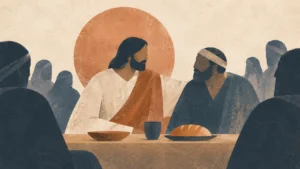
But lastly, I want to talk to you about the man. I love talking about this man — the best man I ever knew, the best man I’ll ever know.
Pilate brought Him forth wearing a purple robe and a crown of thorns, His beard plucked from His face, and almost in mockery said, “Behold the man.” Take a good look at this man. Well, I want you to take a good look at this man tonight. If you do what Pilate said, you’ll miss it — because Pilate meant just look at him.
Looking At Christ Is Not the Same as Looking To Him
Just look at him, and you’ll see a very sorry sight. You’ll see a man wearing a crown of thorns. They saw that, but they never saw a Saviour. If you look at him, you’ll see that he’s arrayed in a gorgeous purple robe — but there’s blood seeping through it. That’s all you’ll see if you just look at him. You’ll see a man suffering intensely, and he hasn’t even gone to the cross yet. You’ll see a man condemned by the court of the earth, on his way out to Calvary. That’s what they saw.
But I want to encourage you tonight to look to the man. There’s a vast difference. Because if you look to Christ tonight — behold this man — you’ll see a Saviour of sinners. That’s what we heard the other night: “Look unto Me” — not look at Me — “and be ye saved, all the ends of the earth.” If you look to Christ, you will see a Saviour. That’s why He came into this world. That’s what He was doing here. That’s why He stood before Pilate. That’s why He went to the cross of Calvary.
Look to Him. He can take away your sin. Look to Him — He is the Saviour of sinners, the only Saviour of sinners. He has the power tonight to save you from your sins. If you’d look to Him, look away from self. You’ve looked in the mirror; hopefully, honestly, tonight you’ve seen what you really are — just a sinner bound for a lost eternity. Now look away from the mirror and look to Him, because He can save you. He is the Saviour of sinners. He says, “All that come unto Me, I will in no wise cast out.” What a Saviour. Look to Him.
The One Sacrifice for Sin
But if you look to Him — not just at Him, but to Him — you’ll see the sacrifice for sin, the one sacrifice for sin forever. God demands a sacrifice for sin. Sin must be paid for, and it must be paid for in precious blood. That’s why the whole sacrificial system of the Old Testament existed — to teach the people that the price of sin is a sacrifice acceptable to God. That’s why they burned it on the altar, because the smoke rose to God as a sweet savour. It was accepted by God, and the person went free. But it was only a picture. Here’s the real thing: if you look to Him, you’ll find out He is the sacrifice. He offered Himself without spot unto God — one holy sacrifice, holy to God, for your sins and for mine. What a sacrifice! And God has accepted Him. You need that sacrifice. Look to Him. Every single person who looks to Him, God can accept — because God accepts the sacrifice. Would you look to Him? Behold the man.
Your Personal Substitute
But there’s something more. I don’t know if it’s “better,” because it doesn’t get better than the sacrifice — it’s all the same reality. But if you look to Him, you’ll find your substitute — not just a sacrifice that God accepts, but your own personal substitute, who took your place, who died in your stead, who became answerable for your sin, who satisfied God on your behalf. He said to God, in effect: “Take Me — pardon him. Take Me — pardon John.”
That’s why someone tonight can say, “I have a perfect substitute who took my guilty place, who died in my stead, who paid the price of my sin.” What a substitute! I thank God every day for this substitute. If you look to Him — behold the man — look to Him, friend, and you’ll find just what you need in Christ, the perfect substitute.
As the hymn-writer put it, and he got it right:
He took the guilty sinner’s place and suffered in his stead; For man, oh miracle of grace, for man the Saviour bled. I seek no other argument, I want no other plea — It is enough that Jesus died, and that He died for me.
Editor’s Note
The closing quotation draws on wording associated with two hymn writers. The “For man, O miracle of grace” stanza is from Anne Steele’s The Wonders of Redemption. “I need no other argument…” is the refrain of Eliza E. Hewitt’s My Faith Has Found a Resting Place.
What a substitute. Look to Him, and you could be saved from all your sins.