Scripture Reading: Hebrews 1 and Hebrews 10
God, who at various times and in various ways spoke in time past to the fathers by the prophets, has in these last days spoken to us by His Son, whom He has appointed heir of all things, through whom also He made the worlds; who being the brightness of His glory and the express image of His person, and upholding all things by the word of His power, when He had by Himself purged our sins, sat down at the right hand of the Majesty on high,
Hebrews 1:1-3; 10:11-14
And every priest stands ministering daily and offering repeatedly the same sacrifices, which can never take away sins. But this Man, after He had offered one sacrifice for sins forever, sat down at the right hand of God, from that time waiting till His enemies are made His footstool. For by one offering He has perfected forever those who are being sanctified. – Hebrews 10:11-14 NKJV
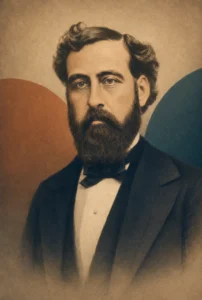
Tonight we’re going to be looking at the column of the Messengers — the preachers — on the chart, and we want to look at Athanasius.
Athanasius — The Man History Almost Forgot
So we’re going tonight to Africa, to a man who was called “the Black Dwarf.” And of all the people on the chart, I don’t suppose I owe a greater debt to anybody than I do to Athanasius. You might wonder why you would be indebted in any way to this black African man from the fourth century. One time, when I had this chart up some years ago, someone looked at it and said, “Athanasius? I never heard of him.” Yet outside the pages of the New Testament itself, Athanasius is probably the man to whom we chiefly owe the preservation of the Christian faith.
Editor’s note
The description of Athanasius as “the Black Dwarf” is common in some modern accounts, but no ancient source for the nickname has been firmly established. The phrase appears to have been popularized by a twentieth-century secondary source and was later removed by its author after its historical basis could not be verified. Athanasius was an Egyptian bishop from Alexandria, but claims about his precise appearance or modern racial classification should be treated cautiously.
A Life Marked by Exile
Let me give you a condensed timeline of his life, just to set the chronological era. He was born circa 297. In 336 he was exiled to a place in Germany because of the false accusations of his enemies. In 339 he had to flee again, this time to Rome, to escape a manhunt. In 356 he was driven into exile by Constantius, after the death of the emperor Constantine. In 362 he was exiled by Julian — maybe you’ve heard of Julian the Apostate — because of complaints from pagan priests. In 365 he had to flee because of the Emperor Valens turning against him. In 366 he helped restore the truth and defeat error. And then in 373, on May the second, in Alexandria, Egypt, he went to be with Christ.
Now in the year 325, Athanasius attended the Council of Nicaea. He was a comparatively young man — the attendant, or secretary, of his teacher, an older man named Alexander — so he was about thirty years of age at the time, much younger than the others. However young he was, he apparently took part in the discussions, because the historian Theodoret states that Athanasius “contended earnestly for the apostolic doctrines and was applauded by their champions, while he earned the hostility of their opponents.” He is spoken of as remarkable both for his physical and mental characteristics — he was small in stature, but like Stephen, he is described as having a face radiant with intelligence.
By the way — never go to Hollywood for your facts. A somewhat recent book and movie completely misrepresented and distorted what happened at Nicaea. They did not meet to decide what Christians would believe. They met to declare — to express, as best they could — what true Christians actually did believe from the Word of God, because that was what was being questioned. Unfortunately, the involvement of the Emperor Constantine at Nicaea set an unscriptural and rather unpleasant precedent, because for the next several decades the Roman emperors would continue to interfere in matters of faith. They would justify this on the basis that they were seeking peace in their realm. So as various emperors exercised this interference, Athanasius would be forced into exile from Alexandria — five times — and it all depended on whether the emperor was influenced by the heretic Arius or not.
Arius, Athanasius, and the Deity of Christ
Arius’s ideas were deeply attractive because they offered a rationally satisfying model of the relationship between God the Father and his Son. Now, lest you think I’m telling you ancient history — there are people knocking on your doors today teaching the very heresy that Arius promulgated back in that period. The Bible teaches that no one knows the Son of God except the Father; Arius’s teaching flattered human intellect by lowering the Son down to the point where humans thought they could understand the Lord Jesus completely. Athanasius saw that if this belief — Christ as merely an exalted creature — won the day, then the gospel itself would be lost.
There were two central points that he laboured for in his preaching.
Why Athanasius Believed Only God Can Save
Number one: only God can save. A mere creature can save no one. So while Arius was trying to give Christ a position of being exalted but below God — just a creature that God had elevated — his understanding of Christ faltered right at this strategic junction, because if Christ is just a creature, he can’t save; only God can do that. Salvation was the prerogative, the privilege, and the potential act of God alone — that is what Athanasius preached. He said, “The Maker must be greater than what he makes, and the Giver has to bestow what is only in his possession.” Therefore, no mere creature had the power or authority to put away sin.
Number two: Christ was worshipped in Christian churches, in assemblies. So Athanasius asked, how could Christians worship Christ if Christ were not God? To worship a creature is to commit blasphemy. In fact, Athanasius contended that Arius and his followers committed blasphemy on two counts: they worshipped, in their minds, a creature as God, and they called God incarnate a mere creature. Athanasius insisted that when we worship the Lord Jesus, the Son of God, we are rightfully worshipping one whose deity finds its source in the deity of the Father.
Persecution, Wit, and the Love of the People
After Constantine’s death, a price was placed on the head of Athanasius. Agents searched everywhere for him. Armed troops burst into congregations — meetings like this — soldiers would suddenly burst in searching for this man to try to capture him. But the Egyptians loyally hid their beloved teacher. During his third exile, they hid him for six years while soldiers were searching for him.
He endured five exiles, as I mentioned, under four different emperors. Through it all he persistently argued that Christ is truly God — on that truth he would stake his life. He spent these extended periods of banishment chiefly doing two things. First, he travelled extensively to far-off places where he conferred with believers regarding the heresy that Arius was teaching, and about the emperors’ interference. Those consultations greatly extended his reputation as a knowledgeable and dependable Christian teacher. Second, these periods of exile afforded him ample time to write the lengthy theological treatises that cause him to be ranked, even today, among the greatest exponents of Christian doctrine.
During these years, false and ridiculous accusations were made against him by the followers of Arius. He was once accused by his enemies of murdering an opponent — they even went so far as to pass around a severed hand that they claimed was from the corpse. However, Athanasius found the supposed dead man and produced him at his trial — with both his hands. His foes said he had done it by magic, and they whipped up such a mob against him that he barely escaped the trial with his life.
As political power swayed back and forth, he was either condemned or exonerated; he either trudged into exile or returned triumphantly to take up his responsibilities, welcomed by the citizens of Alexandria. On many occasions he outfoxed the foxes who were hunting him. For example, on his fourth exile, Athanasius — now in his sixties — was fleeing on the Nile River, hotly pursued by his enemies. They hailed a boat coming down the river and asked if Athanasius were far ahead. A short man in that boat called out, “You’re close to him now — hurry, you may catch him!” And of course, the short man who told them they were close to Athanasius was Athanasius himself, who merrily sailed downstream with his crew while his pursuers strained at their oars, heading in the opposite direction.
As for the esteem in which the people held him — after his first two-year exile, delegates from Alexandria walked a hundred miles out of town to meet him on his return. That was a three-day walk for them. They welcomed him as if he were a conquering hero — it must have been quite a sight, greeting him by flaring torchlight in the dark of an Egyptian night.
His Legacy — and a Famous Quote
He had a high regard for Scripture. He wrote, “These are fountains of salvation, that they who thirst may be satisfied with the living words that they contain.” Athanasius is the first man whose writings we still have who listed for us the twenty-seven books of the New Testament.
Years later, as John Wesley lay dying, he wrote to William Wilberforce, the Member of Parliament, to encourage him in his efforts to abolish slavery. I want you to hear what John Wesley wrote: “My dear sir, unless the divine power has raised you up to be as Athanasius contra mundum — Athanasius against the world — I cannot see how you can go through your glorious enterprise in opposing that villainy which is the scandal of religion” — of course he meant slavery — “that He who guided you from your youth up may continue to strengthen you in this and all things is the prayer of, dear sir, your affectionate servant, John Wesley.”
Finally, here’s a quote that we should all remember, and to which we should all give a hearty amen. Athanasius said:
“Jesus, that I know as my Redeemer, cannot be less than God.”
The Unique Son of God
It is my privilege tonight to tell you about this unique Son of God. I want to tell you about a Sovereign who stands alone — no one can compare to him — and then about a Saviour who stood alone at a place called Calvary.
Notice the uniqueness of the Lord Jesus in the passage we read, and in many other New Testament passages. “God, who at sundry times and in diverse manners” — in many ways, at many different times — “spake” to us. He employed prophets; he spoke through human beings. “But in these last days,” the writer says, he has spoken to us in his Son.
Here is what the Bible says about this unique Son of God: by him all things were made, whether they be visible or invisible, whether they be thrones or dominions or principalities or powers — all things were made by him, and without him nothing was made that was made.
Christ, the Creator and Sustainer of All Things
I think that’s a remarkable statement that John adds — that without him, apart from him, not one thing was made that was made — because there are many people following the heresy that Arius promulgated who will tell you that God created the Lord Jesus, and then the Lord Jesus turned around and created everything. But knowing that God inspired John to write, way back in the first century, “without him was not one thing made that was made” — every created thing was formulated in the vast intelligence of the Son of God, called into being by the limitless power of his word.
He not only created all things, but Paul is careful to tell us in Colossians that by him all things hold together — that it is the Lord Jesus who is the sustainer of life, who called everything into existence by the power of his word. He spake, and it was done; he commanded, and it stood fast. He called everything into existence by the power of his word, and he holds everything in cohesion by the word of his power, says Hebrews chapter 1. That is the unique Son of God — unique when it comes to life, unique when it comes to God.
Christ, the Exact Image of God
Because the Lord Jesus is the revealer of who God is. You see, creation preaches God’s power, his existence, his might, his majesty, and his wisdom — there is so much we can learn from creation about the existence, the magnificence, the mightiness, and the majesty of God. But if you want to know what God is like, the Lord Jesus reveals the heart of God — he shows us the very character of God. Human beings, you and I, were intended, we were created, to be the representatives of God in this world — but sin made that impossible.
If you want to know what God is like, look at the Son of God, because he fully revealed him. Notice what we read: he is “the express image of his person.” You must understand — to be the express image of God’s person would require someone who was co-equal with God, able to fully express God. So if you want to know what God is like, look at the Lord Jesus. If you want to know what human beings were intended to be like, look at the Lord Jesus — because he came to reveal God, and in revealing God to us, he revealed to us what man should have been, what human beings ought to be. And the writer to the Hebrews said, “Forasmuch as the children are partakers of flesh and blood, he also himself likewise took part of the same.” This is the language God employed to preach to us — a man living here, visibly seen. John said, “We saw him, we touched him, we handled him, we heard him.”
Illustration: Helen Keller and the Miracle of Language
Years ago — I don’t know if you’ve ever looked into the story of Helen Keller and Annie Sullivan — it’s an incredible story. There was somebody behind Annie Sullivan too; she herself was a very difficult person, and someone put it on her heart to try to reach this woman and pull her out of the private darkness she was in. Because of the kindness shown to her, Annie Sullivan wanted to do the same thing, and so she worked to try to get through the darkness that was marking not only the vision but the mind of Helen Keller.
Let me give you her words. “We walked down the path to the well-house, attracted by the fragrance of the honeysuckle with which it was covered. Someone was drawing water, and my teacher placed my hand under the spout. As the cool stream gushed over one hand, she spelled into the other the word water.” So here she is, feeling this — she’s blind, she’s feeling this — and Annie Sullivan is spelling on her other hand what it is: w-a-t-e-r. Here are her words: “I stood still, my whole attention fixed upon the motions of her fingers. Suddenly I felt a misty consciousness as of something forgotten — a thrill of returning thought. And somehow the mystery of language was revealed to me. I knew then that ‘w-a-t-e-r’ meant that wonderful, cool something that was flowing over my hand. The living word awakened my soul, gave it light, hope, joy, set it free. There were barriers still, it is true, but barriers that could in time be swept away.”
Hear what she’s saying — water is coming, being spelled here, and somehow, she said, the mist was lifted, and she understood that “w-a-t-e-r” was this cool thing flowing over her hand. Listen, friend — look at the life of the Lord Jesus, and J-E-S-U-S is spelling out what God is: how much God loves you, what God wants for you, how he wants you to be with him forever. That’s the language God employed. And the Lord Jesus is the accomplisher of everything that God desires.
Christ and the Certainty of the Future
It’s through the Lord Jesus that God’s mighty and eternal purposes are carried out and are going to be brought to fruition. We might think the world is spinning out of control — he is guiding everything. God is guiding everything toward the moment when his Son is going to be back in this world, honoured and exalted. In fact, the Lord Jesus is unique when it comes to history and destiny, because God is resolutely and inexorably moving toward the climax — the return of the Lord Jesus as the King of kings and the Lord of lords.
Part of a larger series
This message is part of The Impact of the Bible & Christianity on World History, exploring people whose Christian convictions shaped their lives and influence.
He will come back for his people first — what we have come to call the Rapture. He will come back with his people to rescue the planet, with the armies of the nations of the world gathered together at Armageddon. You see what is happening in the Middle East just now — Israel could be wiped off the map tomorrow, and not one word of prophecy would be violated. All I can tell you is that when the Lord Jesus comes back for his people, and these events begin to take place, Israel will be in that land and be a nation. Now we see them there, and we begin to wonder — maybe this is it, maybe this is the time period in which we live, that the Rapture is very near, and that the scenery, if I could put it that way, is in place — which will be necessary after the Lord takes his people home to heaven. But God is going to bring his Son back and put him on the throne of the world, and he is going to remove sin from the universe.
The Lord Jesus alone is the Creator, the Sustainer, the Director, the Judge, and the Saviour. He is the King of kings, the Lord of years, the Potentate of Ages, the Emperor of time. He is the one who is going to reign forever and ever. He is the unique Son of God. He stands alone.
The Saviour Who Stood Alone at Calvary
But there was a moment in the history of our poor, tear-filled world when that beloved Son of God stood alone at a place called Calvary. And I want to tell you, in the remaining moments of this meeting, something of what that involved. He alone carried our sins in his own body on the tree.
You see, you and I are guilty. The two malefactors, for instance, were crucified the same day, at the same place — but they were bearing their own sins, their own guilt, because they were guilty, just as you and I are guilty. But the man on the middle cross was not bearing his own sins — he had none. He was bearing my sins. He was dealing with my sins. And so notice what we read: “when he had by himself purged our sins.”
Alone Before God — The Day of Atonement
“By himself” — nobody helped him. If you’re familiar with Jewish history, particularly from the Bible, you’ll remember that on the Day of Atonement, the high priest would go alone into the presence of God — nobody with him. There were other members of the priestly family who would function at different times, but not on this day, not in there. The high priest would go alone into the presence of God. He’d bring blood with him, because he dare not go in without blood. He’d have a censer in his hand to fill that compartment in the tabernacle with a cloud of incense. But he’d have to do it alone. However, he was never able to purge sins, nor was he ever able to sit down — there were no chairs in the tabernacle, because this was an ongoing work, which is why we read in chapter 10, “every priest standeth daily ministering and offering oftentimes the same sacrifices, which can never take away sin.” But this man, all by himself, at Calvary, put my sins away.
Illustration: The Loneliest Man in History
I had visitors from England a number of years ago, and one of the places we went to visit was Washington, D.C. We came to the Smithsonian Air and Space Museum, and these poor people had been taking me around — I’m sure they were sick of me — so I said, “I’ve been here many times; you go ahead and enjoy the museum. I’ll be right down there, there are chairs outside the cafeteria — I have some work I can do. When you’re done, just come and find me.” So they went, and I was sitting alone down there reading something, when a tour group came right up to where I was.
The people had their backs to me, but the man leading them, the guide, was facing me — standing at a railing, with the lunar module on the other side. He was telling them about the astronauts, that unforgettable moonwalk — “one small step for a man, one giant leap for mankind” — and he mentioned that Michael Collins, the third astronaut, had once been the assistant manager of the Smithsonian, and that he often stood right there telling people about his experience. He said that whenever the three astronauts were interviewed together, people would want to know from the others what it was like to walk on the moon. But nobody ever asked Michael Collins, because while the other two were moonwalking, he was circling the moon alone.
Then this guide said there was one time someone turned to Collins and asked, “Mr. Collins, when you were up there and circled around to the far side of the moon, you were the loneliest man in the history of the human race — what was that like?” I must tell you, when I heard those words, I don’t know another thing the man said, because my mind had gone somewhere else.
Bearing the Wrath of God Alone
The loneliest man in the history of the human race was a man hanging on a cross. There were crowds around him, there were malefactors on either side of him, but he was going all alone into the presence of God, where no human being had ever gone — because he was carrying my sins, like the scapegoat carried away into a far-off land. He was going into depths that had never been plumbed before, because he was there to bear my sins in his own body on the tree.
Do you know what that involved? It meant that he alone suffered the wrath of God against those sins. Because we were not only guilty, but as a result of that guilt we were condemned. See, the malefactors who were hanging that day were not only guilty, they were condemned to die — so those two men suffered the wrath of Rome, they were condemned and were suffering the wrath of the government. But the man on the middle cross was suffering the wrath of God — he was suffering God’s wrath against my sins.
Thousands and thousands of people have been crucified — listen to me — no one ever suffered what the Lord Jesus suffered. No one ever went through what he went through. That is why, I repeat, movies about his death fail to convey what truly happened, because they can only show you what can be seen by the human eye. But alone on that cross, the Lord Jesus became the object, the target, of the thundering judgment of God, and he absorbed all of those lightning bolts of wrath into himself. No one can depict that or describe it — we only have Bible language to give us a faint idea of what it must have been like when he was pummelled on that tree, when the wrath of God fell on him.
Illustration: Major John André and the Poem in His Pocket
I noted that 244 years ago today, my country killed a man that it didn’t want to kill. He was a major in the British army, and the American authorities at the time did their best to try to have his life spared, because the man they really wanted was the traitor who had worked with him — Benedict Arnold. But while Arnold escaped, the British major was caught — Major John André. He was a gentleman; the soldiers where he was held captive admired him. General Washington desperately wanted Arnold, not André, and offered to exchange them, but the British authorities had promised Benedict Arnold safe passage, and André was a spy. So, 244 years ago today — October of 1780 — at a place called Tappan, New York, Major John André was led out to be hanged.
In his pocket, I should tell you, was a poem — he was a minor poet himself, in fact you’ll find him mentioned if you’re ever in Westminster Abbey. But the poem in his pocket was written by a man named Jehoiada Brewer, and I have heard that poem quoted from when I was a child in Sunday school. Let me give you some of the words: “On Christ almighty vengeance fell, enough to sink a world to hell; he bore it for a sinful race, and thus became my hiding-place.”
Did you hear those words — on him, on Christ, almighty vengeance fell? The Bible talks about the sword of judgment being awakened in the hand of God, but the arm that was wielding that sword was the arm of the Almighty. So we will never understand what pain was involved in the awful stroke of judgment that struck Christ on the cross, because he was paying, suffering, for my sins. He alone paid for sin by sacrificing himself. We were not only guilty, and because of being guilty, condemned — but we were also disqualified. There was nothing we could have done to put away our own sin. The malefactors were paying their debt to society by dying; the Lord Jesus was paying my debt to God, offering himself up. Nobody else could have done that. He gave himself.
Frankly and Freely Forgiven
Now, as a result of that — as a result of the fact that he stood alone at Calvary and suffered that wrath and bore my sins — let me tell you what God can do for you. God can, frankly — that’s a Bible word — forgive you. That’s talking about the grace of it. God can forgive sinners who don’t deserve it. You don’t deserve to be saved; you don’t deserve to have your sins forgiven. Neither did I. The Lord Jesus told a parable about the idea of God frankly forgiving sins. Romans chapter 3 says he does it freely, through the redemption that is in Christ Jesus — no charges, no money involved, no exchange of some commodity that then allows God, because of what you have done, to forgive your sins. He’ll do it freely tonight, not because of you.
I had the idea growing up that God would forgive my sins if I believed in Jesus strongly enough. Listen to what John wrote to the Christians: “Your sins are forgiven you for his name’s sake.” God didn’t forgive me because of something I did. God forgave me because of something Christ did, and because of what God thinks of Christ. The moment I trusted Christ, God freely forgave me. And maybe the best thing of all is this: God forgives forever. That’s the greatness of it — he will never call to memory the sins he has forgiven. God does not forget things, but he can do what you and I can’t — if I told you, “Do not think of a yellow elephant right now,” a yellow elephant will come into your mind. God can dispel my sins from his memory and never call them up again.
He uses very poetic language to describe that. He says he’s cast my sins into the depths of the sea. He says he’s put my sins behind him, and that he never turns to look for them. He says he’s separated me from my sins as far as the east is from the west.
As Far as the East Is From the West
Interesting thing, isn’t it — if you were at the North Pole and you travelled south, if you could, and went far enough, a point would be reached where you’d be travelling north again. But if you travel east, you’ll never travel west — you’ll always be heading east. So God doesn’t say he removed my sins as far as the north is from the south. He says as far as the east is from the west — because my sins and I will never meet again, because the Lord Jesus put them away.
Illustration: “I Was Saved by Body Piercing”
I was taking people to a place in Philadelphia called the Reading Terminal — it’s a former train terminal, and it’s now an open market. It’s the oldest open market in the United States. If I say “open,” it’s not outdoors, but it’s a conglomeration of just about everything you could think of — there are Pennsylvania Dutch who bring in baked goods most of the week, and just everything you could imagine.
I was walking — you’ve got to understand, this is wall-to-wall people — and there’s a man coming my way. I just caught a glimpse — you know how you see people with their t-shirts, and they’re past you before you can read everything on them? Well, I caught a glimpse of what looked like “Isaiah 53, verse 5 — he was wounded for our transgressions, he was bruised for our iniquities.” I did a double take. He was already past me, and I turned around just to see — and I was glad I did. You know what was on the back of his shirt? It said, “I was saved by body piercing.” I was saved by body piercing — I was saved by the piercing of his body on the cross. “He was wounded for our transgressions,” and as a result of that, God can forgive your sins, frankly, freely, forever, if you will trust his Son — because he alone purges sin when the sinner trusts Christ.
Because we were not only guilty, and as a result of that condemned, and because of what sin is, disqualified — we were absolutely helpless. The malefactors, both of them, initially said to the Lord Jesus, “Save thyself, and us” — because they were helpless to save themselves. He is mighty to save. He is able to save you tonight, no matter who you are, no matter what you’ve done. The blood of Jesus Christ, his Son, cleanses us from all sin. He is mighty to save — and that is why one of the glorious titles of this unique Saviour is this: he is the Saviour for the world. So no matter who you are, if you come to him tonight, he’ll save you.
Mighty to Save
Illustration: Charles Wesley’s Statue in Bristol
If you ever get to Bristol, England, there’s a wonderful statue on the opposite side of what were Wesley’s reading rooms. It’s a statue of his brother, Charles — Charles Wesley — standing there among the musicians, and he was of course an incredible hymn-writer and musician. The statue shows Charles Wesley with his hand outstretched, and there are people by the hundreds every day walking underneath it, his hand outstretched as if he’s reaching to the crowd. And the words on the pedestal of the statue are these: “Oh, let me commend my Saviour to you.”
So please — let me commend my Saviour to you, and tell you about this blessed, this unique person, who is the only one who can save you, and forgive you, and deliver you, and rescue you. And if you trust him tonight, he will save you — and as the hymn says, he will save you, he will save you now.
Sources and Further Reading
This message is presented as a sermon transcript and preserves the speaker’s original wording. For readers who would like to explore the historical details of Athanasius, the Arian controversy, and his defence of the deity of Christ further, the following sources include Athanasius’s own writings as well as historical accounts of his life and influence.
- Athanasius of Alexandria — life, Nicaea, and exile. Historical accounts trace Athanasius’s presence at the Council of Nicaea in AD 325, his subsequent service as bishop of Alexandria, his opposition to Arianism, and the repeated periods of exile that marked much of his ministry. Read the Encyclopaedia Britannica historical account.
- Athanasius, Discourses Against the Arians. In his own writings against Arian teaching, Athanasius argues that the Son is not a created being but truly and eternally the Son of God. He specifically connects Christ’s deity with His rightful worship and with the salvation accomplished through Him. Read Against the Arians at New Advent.
- Athanasius, Festal Letter 39 — AD 367. This letter contains the earliest surviving list that names precisely the twenty-seven books found in the New Testament today. It also contains Athanasius’s description of the Scriptures as “fountains of salvation” whose living words satisfy those who thirst. Read Festal Letter 39 at New Advent.
- John Wesley to William Wilberforce — February 24, 1791. In one of the final letters of his life, Wesley encouraged Wilberforce in his campaign against the slave trade, telling him that unless God had raised him up “as Athanasius, contra mundum” — Athanasius against the world — he could scarcely withstand the opposition before him. Read Wesley’s letter to Wilberforce.